Etsy Dropshipping in 2027: Rules, Fees, and Real Profit Math
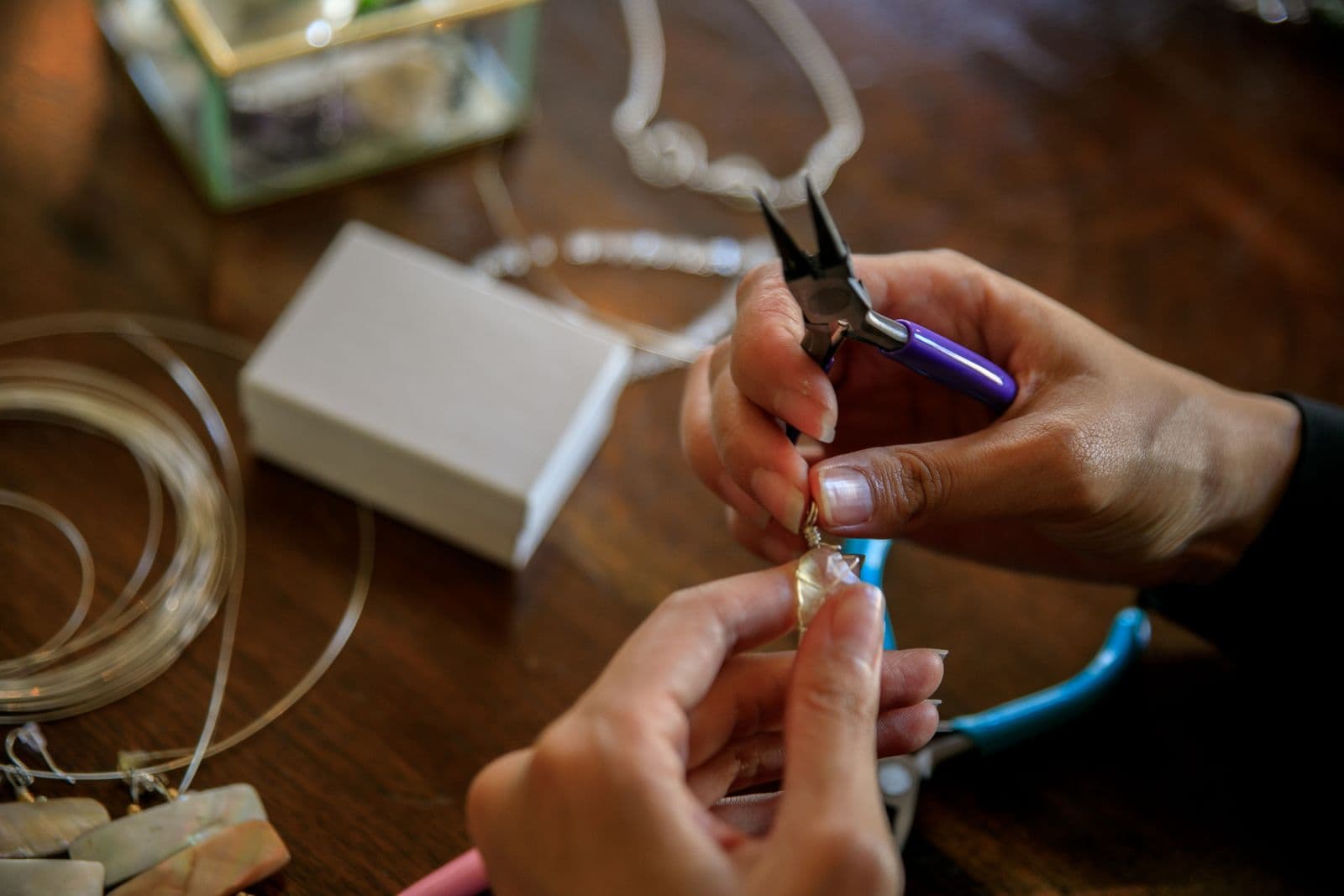
Etsy does not allow classic dropshipping in 2027. Its Seller Policy says it in one sentence: dropshipping and reselling are banned, except in specific cases like craft supplies. What Etsy does allow is a narrow, clearly defined slice of the model. You can sell items you made yourself, items you designed, vintage items you handpicked, and craft supplies you sourced. That single distinction decides who builds a durable shop and who gets suspended in month two.
Etsy is still worth it. Gross merchandise sales on the site reached $2.6 billion in Q3 2026, an 8.8% increase from the same period in the prior year. In addition, Etsy saw active buyers grow year over year for the first time in two years, according to Etsy's Q3 2026 results. The company closed 2025 with 86.5 million active buyers. All these buyers come to search and buy specific, often personal and giftable products and are willing to pay even more than Amazon’s prices for them. No ad budget is required to show up for these searches.
Etsy has a rulebook which is enforced by a combination of automated systems, manual review by Etsy staff and reports from other users. Etsy’s fee stack takes a meaningful cut of every order before you see a cent. In this guide we describe what Etsy allows in simple terms, outline the Etsy 2027 fee schedule in full and also calculate what you will net from a sale at a variety of different prices. We also show how to research products that survive both. Our guide is entirely unbiased and simply describes how Etsy works for people who sell on the site, and why it fails for others.
Etsy's Dropshipping Policy in Plain English
Etsy spells out its position in its Seller Policy, and the core rule is one line long: everything listed for sale must be made, designed, handpicked, or sourced by the seller. Each of those four verbs is a legal route into the marketplace, and each has its own boundaries.
In practice, the allowed side of the line looks like this:
- Handmade items including knitted items, poured candles and welded metal items such as bottle openers.
- The items you design are produced by a production partner that you disclose in the listing. This is where print-on-demand lives: your artwork on a poster, on a mug, on t-shirts, etc. printed and shipped by a production partner such as Printful or Printify.
- Craft supplies, which may be commercially produced. This is Etsy's explicit exception and the closest thing to traditional reselling on the platform.
- By vintage, we mean items of 20 years and above, that you have selected yourself.
And the banned side:
- Reselling mass-produced goods in the handmade categories, whether you hold stock or not.
- Listing an item, then ordering it from AliExpress, Amazon, or another retailer after the sale to ship to your buyer.
- Supplier or stock photos. Etsy requires your own photographs or video for what you sell, with narrow exceptions for custom items and items made with a production partner.
- Undisclosed AI creations. If the design was created by AI, the listing must state that as well.
- Intellectual property infringement such as fan art made with characters who are protected by their owner, using a brand name in your tags, or selling merchandise with a trademarked phrase.
Print-on-demand (POD) is that unclear area that so many get wrong, so it is best to describe this in clear terms. Print-on-demand is allowed on Etsy in the ‘designed by you’ section as long as you designed the artwork and the print is made by a production partner that you mention in the listing for that print. Selling prints with designs by others, including supplier’s catalogs, as your own work is against the rules and in the past has resulted in the closure of many shops on the site. The route has to be legitimate and the design has to be your own work.
Two 2026 details catch sellers off guard. Orders shipped to the United States must go Delivery Duty Paid, so the buyer never sees a surprise customs bill. A seller who ships DDU can end up refunding duties out of pocket. And Etsy's enforcement is partly crowdsourced: competing sellers and buyers report suspicious listings, automated systems flag them, and listing fees are not refunded when a listing is removed. For the bigger legal picture beyond Etsy's own rules, our guide on whether dropshipping is legal covers the law side.

Etsy Fees in 2027: What the Platform Actually Takes
Etsy’s fee structure is transparent once you lay out the components, and unkind if you price without them. The full list comes from Etsy's Fees & Payments Policy, last updated October 5, 2026.
You pay $0.20 per item listed, and each listing lives for four months. When you sell a quantity of the same item, the listing renews at $0.20 after each sale, which makes the listing fee effectively a per-order cost. Auto-renew is on by default, so listings that never sell still cost you $0.20 every four months until you switch them to manual.
The transaction fee is 6.5% of the listing price plus shipping and any gift wrap you charge. US sellers do not pay it on collected sales tax, while sellers elsewhere pay it on their tax-inclusive price. The payment processing rate through Etsy Payments is set by your bank’s country, charged on the entire order total including tax and shipping: 3% plus $0.25 in the US, 4% plus £0.20 in the UK, 4% plus €0.30 across most of the EU. A one-time shop set-up fee may apply when you open, depending on your region, and Etsy shows it during onboarding before you confirm.
| Fee | Rate | Charged on |
|---|---|---|
| Listing fee | $0.20 per listing | Creating or renewing a listing (4-month term, renews per sale) |
| Transaction fee | 6.5% | Item price + shipping + gift wrap (not US sales tax) |
| Payment processing (US) | 3% + $0.25 | Full order total incl. tax and shipping, rates vary by country |
| Offsite Ads | 15% under $10k/yr (optional), 12% at $10k+ (mandatory) | Orders attributed within 30 days of an ad click, capped at $100 |
| Currency conversion | 2.5% | Sales when your listing currency differs from your payout currency |
| Regulatory operating fee | Small fixed percentage in certain countries | Item price + shipping, applies in regulated markets only |
| Etsy Plus (optional) | $10/month | Subscription with 15 listing credits and $5 ad credit per month |
Offsite Ads deserves its own warning because it is the fee sellers discover last. Offsite Ads are the ads that Etsy puts up for listings on other sites. If a buyer clicks on one of those ads and orders within 30 days, then you get to pay another 15% of the order. Shops under $10,000 in trailing 365-day sales can opt out. Once a shop crosses $10,000, participation becomes mandatory for the lifetime of the shop at 12%, capped at $100 per order. You cannot switch it off, and a single viral post can route a large share of your orders through it.
Add it up and a sensible planning number for a US seller is 10% to 12% of every order plus roughly $0.45 in fixed fees before ads. Switch on Offsite Ads attribution and a sale can cost 22% to 27%. Products that cannot carry that weight do not belong on Etsy, and most guides skip this part entirely.
The Profit Math: What a $40 Etsy Sale Actually Nets
Time to run some real numbers here. Take a print-on-demand art print listed at $35 with $5 shipping, so the buyer pays $40. Here is where every dollar goes for a US seller:
- Transaction fee: 6.5% of $40 = $2.60
- Payment processing: 3% of $40 + $0.25 = $1.45
- Listing renewal: $0.20
- Paid out to you: $40 minus $4.25 in Etsy fees = $35.75
- POD cost, printing plus shipping to your buyer: $16.00
- The amount left before accounting for overhead and refunds is $19.75. This is approximately 49% of the order.
That is a healthy order. Now watch the same sale arrive through Offsite Ads: the 15% attribution fee adds $6.00, Etsy’s total cut becomes $10.25, and your profit drops to $13.75, about 34%. Still workable at this price point, which is exactly why price point selection is the whole game on Etsy.
Cheap items are where shops bleed money. Take a $12 sticker with $3 shipping, a $15 order. The transaction fee is $0.98, processing is $0.70, the listing renewal $0.20: $1.88 in fees, and $13.12 paid out. Against a $6.50 POD cost you keep $6.62 per order. The percentage looks fine, but the absolute dollars do not: you need fifteen of those orders to clear $100, and a single lost case or refund erases the profit on several of them. If that same sale comes through Offsite Ads, fees jump to $4.13 and your $6.62 shrinks to $4.37. The fixed $0.45 in every order equals 3% of a $15 sale but only 1.1% of a $40 sale, so Etsy's structure punishes cheap products and rewards substantial ones.

The working rule from this math: aim for at least 50% gross margin before fees and a price band of roughly $20 to $60, where the fixed fees stay small and the dollars per order stay meaningful. Prefer light, unbreakable items, because one damaged-goods case will cost more than the margin on the next two sales. Higher price points compound the advantage, which is the same logic behind high-ticket dropshipping margins. A product that looks profitable at 30% markup on paper can lose money slowly on Etsy.
How Etsy Decides Which Listings Get Seen
On your own store you generate every visit yourself. On Etsy, search traffic belongs to the marketplace, and its ranking system weighs a documented set of factors:
- Query matching: titles, tags, categories, and attributes that mirror the words buyers actually type.
- The click-through and conversion history of the listing and your shop.
- Recency: new and renewed listings get a small temporary visibility boost.
- Shipping price: free or cheap shipping gets preference, especially for US buyers.
- Shop record: reviews, completed policies, and service history feed your standing.
The recency boost makes your first two weeks with a listing a launch window, not an afterthought: complete photos, all 13 tags used, every attribute filled, and a price that can win the click. Your processing-time promise is a ranking input too. Promise two-day handling to look fast, miss it when your production partner takes four, and your late-dispatch record drags every listing down with it. Underpromise and overdeliver, every time.
Finding Products and Designs That Survive the Fee Math
Everything above reduces to one discipline: know the numbers before you list. On Etsy that means designs with proven gift and decor demand, a price that clears 50% margin before fees, and competition you can actually outrank. Gut feeling is how beginners fill a shop with forty listings and sell three.
Etsy itself is the first research tool. Search your idea and read what the top listings tell you: review velocity shows how fast a design sells, photo quality shows how hard it will be to out-present incumbents, and price clustering shows where the market settled. Then validate the same demand outside the marketplace bubble. In Tradelle's Product Picks, every product carries a full research report: estimated monthly searches with history and projection, busiest months, and a saturation read with exact store counts and median prices. The profit calculator works out net profit per sale and break-even ROAS before you spend anything on ads, so a product with 40 saturated sellers and thin margins gets rejected in 30 seconds instead of after a season of slow Etsy sales.
When you want to see who else is selling an item and how much they are earning from it, Competitor Research searches more than 42 million products across millions of live stores, with store revenue and bestseller ranks attached. Sort by store revenue and you see who makes real money with the product instead of who merely lists it. Our guide on validating products before spending on ads walks through the same discipline step by step, and it applies to marketplace listings just as much as to paid traffic.
One honest note on tooling: Tradelle's one-click import and automated fulfillment run through Shopify, so Etsy sellers typically pair the research side with their own disclosed production partner for Etsy orders. The pattern that works looks like this: validate demand and margins with real data, produce your designs through a print partner, sell on Etsy for its built-in gift demand, and build your Shopify store in parallel as the asset you fully own, with Fulfillment by Tradelle sourcing directly from manufacturers, handling quality control, customs, and delivery there.
Etsy vs. Your Own Store: Where Each One Wins
Etsy’s value to the seller is borrowed demand. Millions of buyers already have trust in the Etsy checkout process and arrive at a shop with gift money in hand. In exchange you pay 10% to 25% per order, you accept someone else’s rulebook, and you build equity in a shop you do not own. A suspension can erase years of reviews overnight, which is why experienced sellers treat Etsy as a channel, never as the whole business.
Your Shopify store is the opposite. No marketplace fees, and you’ll know exactly what your policies are. Your email list and brand will continue to compound over time. The cost of each visitor to your store is that you had to earn their visit through paid advertising, content, or search work that you built up. Our Amazon FBA vs. dropshipping comparison covers the same channel-versus-store question from another angle if you are weighing marketplaces generally.
Use Etsy to validate designs against real buyers with zero ad spend. Then move the winners off of the marketplace and into your own store where the 10% to 25% you used to pay the marketplace becomes your advertising budget. If you are starting from zero, our step-by-step guide on how to start dropshipping in 2027 covers the store side in detail.
Starting on Etsy Without Getting Suspended
Set up honestly from day one. Fill out your About section with the real people and process behind the shop, disclose your production partner in every listing that uses one, and mark AI-generated designs as such. Photograph your own samples whenever you can. Supplier mockups are the fastest way to look like the resellers Etsy purges. Keep your intellectual property hygiene strict: no protected characters, no brand names in titles or tags, no trademarked phrases on merchandise, because IP strikes stack up faster than any other ban reason.
The operational rules are tedious and they keep accounts alive. Answer buyer Messages within 24 hours, because ignored buyers open cases and Etsy gives you 48 hours to resolve before it steps in. Ship inside your promised processing time, and remember US orders must go Delivery Duty Paid. Buyers in the EU and UK hold a 14-day right of withdrawal on most items, so budget for the occasional return the same way you budget for fees. Our guide on handling customer complaints covers the playbook that keeps one bad order from becoming a metrics problem.

Also, be prepared to have your payment account placed into reserve by Etsy while they verify your ability to fulfill any orders placed on newly viral listings. This is normal risk control and is not intended to be punitive in nature. Shops with solid, honest listings and consistent, timely dispatch will find that their payment account limits are raised over time. The sellers who get into trouble here are those who scale up a listing for a design that they never actually sampled, to fifty orders a day.
FAQ: Etsy Dropshipping in 2027
Is dropshipping on Etsy legal and allowed?
Dropshipping is legal in most markets, but Etsy’s own rules are stricter than the law. Classic dropshipping and reselling are not allowed on the marketplace. What Etsy allows is selling items you made, designed, handpicked as vintage, or sourced as craft supplies, with production partners and designs created with AI disclosed in the listing.
Can I dropship from AliExpress to Etsy?
No. Ordering mass-produced goods from AliExpress after a sale and shipping them to your Etsy buyer is reselling, and Etsy removes listings and suspends shops for it. The compliant pattern that feels similar is print-on-demand: your own design, produced and shipped by a disclosed production partner.
How much does Etsy take from each sale?
For a US seller in 2027, budget a $0.20 listing fee per sale, a 6.5% transaction fee on the item plus shipping, and payment processing of 3% plus $0.25. Together they take roughly 10% to 12% of a typical order. If the sale is attributed to Etsy’s Offsite Ads, add 15% (or 12% for shops over $10,000 in trailing 365-day sales), for a total of 22% to 27%.
Is Etsy dropshipping still profitable in 2027?
Yes, for design-led sellers who price with the full fee stack. A $40 print-on-demand order with a $16 production cost nets about $19 before overhead, while products under $15 leave only a few dollars per order and cannot absorb refunds. Aim for 50% gross margin before fees and a $20 to $60 price band.
Should a beginner start on Etsy or on their own store?
Etsy is a softer entry point than an independent store because it has buyers already, you don’t have to spend money on ads, and you start small so you learn slowly. Your independent store is your long-term asset. Most successful sellers use Etsy to validate designs before creating a Shopify store to scale the items that sell well, spending the marketplace fee they previously paid to Etsy as their growth budget.
Final Thoughts
Most failures on Etsy can be attributed to two issues that can be avoided. First, there is the issue of the Etsy policy. Most sellers who list mass-produced items and call them handmade get kicked off eventually. Then there’s the math issue. Sellers who price from production cost alone, ignoring the 6.5% that also applies to shipping, the processing fee on the taxed total, and the Offsite Ads wildcard, lose money order by order and call it bad luck.
Do the dull work in the right order. Read the Seller Policy once, end to end. Design something that is genuinely yours, validate the demand with real numbers, and run the fee math on every candidate before it goes live. Etsy rewards the seller who treats it like a craft business with spreadsheets, and it has tens of millions of buyers waiting for exactly that person.