Electronics Dropshipping in 2027: Certifications, Batteries, and Warranty Math
Yes, electronics dropshipping can work in 2027, but preparation shows up in your bank account. Demand is enormous and some products clear 50% or 60% gross margin before ads. The same catalog also contains radio approvals, lithium-battery restrictions, and refunds that can erase a good week.
Treat every gadget as an exact SKU, not a generic idea. A speaker with a different radio module needs a new compliance check. A power bank follows a different air-cargo rule from an installed battery. A $180 defect does not behave like a $35 defect.
This guide covers real Tradelle economics, FCC and EU evidence, the battery rules changing on 1 January 2027, and warranty math you can copy. You will also get a launch calendar and a simple spec rule: show what the unit in your hand actually does.
Electronics Demand Is Big, but Margin Lives in the Details
TBRC puts global consumer-electronics ecommerce near $0.96 trillion in 2026. ECDB uses a lower 2025 base and slower growth. Their scopes differ and include broad B2B and B2C activity, so do not blend them or mistake either for the dropshipping opportunity. The useful question is what one order keeps after shipping, ads, and defects.
The smartwatch has demand and breathing room
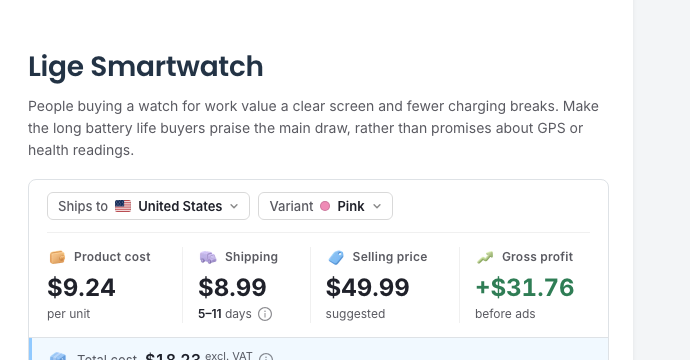
The Lige Smartwatch shows why the niche is tempting. Tradelle estimates about 3,800,000 searches a month, down 16% year-over-year but steady across the seasons. Product cost is $9.24 and shipping is $8.99, totaling $18.23 excluding VAT. At $49.99, gross profit is $49.99 - $18.23 = $31.76, or about 64% before ads and after-sales costs.
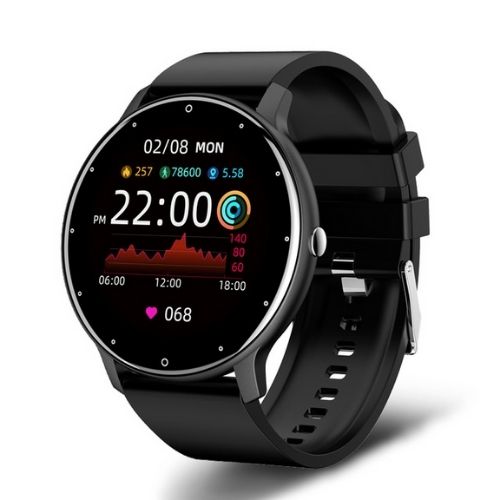
Tradelle lists break-even ROAS at 1.67. Treat that and the demand figures as app estimates, not promises. Competition is crowded at 16 tracked stores, the top three hold 100% of tracked orders, and the median price is $46.13. Your page needs clear phone pairing and honest everyday functions rather than a copied feature list.
Volume products can still make useful gross profit
The Cordless Turbo Air Duster costs $10.99 plus $10.99 shipping, totaling $21.98 excluding VAT. Selling at $54.99 leaves $33.01 gross, a 60% margin, with listed break-even ROAS of 1.77. Tradelle estimates 38,000 monthly searches, up 14% year-over-year, with December busiest. Six tracked stores and a $46.72 median price make this a cleaner test than a trend with no room for acquisition cost.
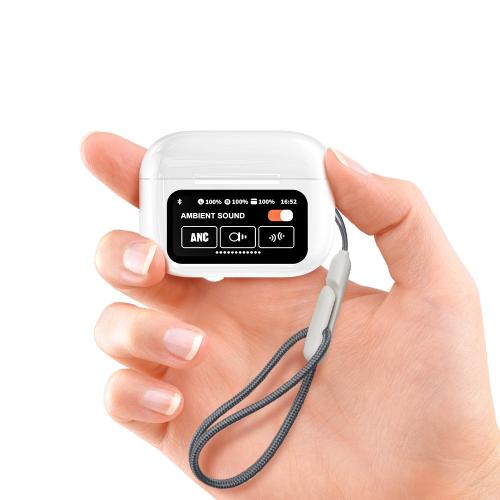
Earbuds with Screen have about 1,100,000 estimated monthly searches, down 2% year-over-year and busiest in December. Product cost is $7.79 and shipping is $8.99. At $34.99, the arithmetic is $34.99 - $7.79 - $8.99 = $18.21 gross, or 52%, with listed break-even ROAS of 2.07. The catch is concentration: 13 tracked stores compete and the top three hold 99% of tracked orders. Demonstrate the real case screen, controls, fit, and microphone.
A low product cost can still produce bad economics
The Smart Neon LED Strip costs only $4.70, but shipping is $21.99. Against a $34.99 selling price, that leaves $8.30 gross, a 24% margin, and listed break-even ROAS of 5.01. There are 47 tracked stores, with the top three holding 72% of tracked orders. The Foldable Bluetooth Keyboard has similar pressure: $18.13 cost plus $10.99 shipping and a $39.99 price leave $10.87 gross at 27%, with listed break-even ROAS of 4.25 across 56 tracked stores.
Higher prices do not automatically fix this. The Projector HY300 Pro has about 1,900,000 estimated monthly searches, but $47.50 cost plus $12.99 shipping against an $84.99 price leaves $24.50 gross at 29%, with listed break-even ROAS of 3.91. Use Product Picks to compare these estimates, then follow the product validation routine before ad spend. A launchable product contains evidence, route acceptance, after-sales room and search possibilities.
The US Check: FCC Certification, SDoC, or an Exemption
Most electronic products need FCC equipment authorization, but not all do. The FCC equipment authorization procedures distinguish intentional radiators, unintentional radiators, combination devices, and exemptions. Classify the actual product rather than asking every supplier for the same document.
Wireless transmitters generally need Certification and an FCC ID
Intentional radiators deliberately emit radio frequency energy. Bluetooth, Wi-Fi, and cellular transmitters generally require FCC Certification under 47 CFR Section 2.907, with an FCC ID. That includes wireless earbuds, Bluetooth speakers, and Bluetooth smartwatches unless a specific rule says otherwise. Request the exact model's FCC ID, search the official FCC ID database, and match the grant, model, frequencies, and exhibits to the device you intend to sell.
SDoC and exemptions are different from Certification
Unintentional radiators use digital logic or internal radio-frequency signals without being designed to transmit wirelessly. Unless exempt, these generally use Supplier's Declaration of Conformity, or SDoC, under 47 CFR Section 2.906. Ask for test evidence and the responsible party, which must be located in the United States. Do not demand an FCC ID as the only evidence for an SDoC device. Products combining a certified transmitter and digital circuitry can need both procedures. If a supplier claims an exemption, record the exact rule and rationale.
Verify the exact variant and repeat the check after changes
The FCC verification is for the hardware that you can sell, not some similar photo of another listing. Freeze the legal manufacturer, model, hardware revision, radio functions, label, chipset, and antenna in your dossier. Then make these steps part of your launch gate:
- Match the FCC ID grant and exhibits with the corresponding radio product in cases of Certification.
- Maintain test evidence for SDoC testing as well as name and address of US Responsible Party for testing covered by this procedure.
- Write down the specific basis for any claimed exemption.
- Run the check again after any radio, chipset, antenna, circuit etc. change in design has been made.
Silent component substitution is a commercial problem. A cheaper radio module can invalidate the evidence behind a live listing.
The EU Stack Is a Process, Not a Logo Purchase
CE starts with the manufacturer's conformity assessment
There is no central EU body issuing a generic CE certificate, and you cannot buy a badge that makes a gadget compliant. For products covered by harmonised EU acts that require CE, the manufacturer identifies applicable acts, performs the conformity assessment, compiles the technical file, signs the EU Declaration of Conformity, and affixes the mark. A notified body participates only when required. The official EU guidance on CE marking explains the process.
Request the exact-model EU Declaration of Conformity with all applicable acts, a technical-file index, test evidence, labeling, and instructions. Keep the declaration and technical documentation for at least 10 years. If you have a product made and sell it under your own brand, you are the manufacturer. An EU-established importer must verify the manufacturer's assessment, documentation, marking, traceability, instructions, and safety information. A marketplace does not take those duties from you.
RoHS limits apply to each homogeneous material
RoHS, Directive 2011/65/EU, restricts 10 substances in electrical and electronic equipment. The general maximum is 0.1% by weight in each homogeneous material, while cadmium is limited to 0.01%. This is not an average across the whole gadget. Check exact-model material evidence and any application-specific exemption. A component report alone is not enough.
GPSR changes what your EU offer must show
The General Product Safety Regulation, Regulation (EU) 2023/988, applies since 13 December 2024 and not since 2027. Article 16 states that only a consumer product with an economic operator established within the EU can be placed on the market within the EU. The economic operator’s name and postal and electronic contact details must be indicated on the product and/or packaging, on the parcel and/or on accompanying documents. Marketplaces and suppliers from abroad do not automatically fulfill this requirement.
Article 19 belongs on your product-page checklist. An online offer must visibly show the manufacturer's name and postal and electronic address, the responsible person's details when the manufacturer is outside the EU, a product identifier, and required warnings in a language consumers understand. A supplier PDF in your inbox does not fix an incomplete offer.
WEEE is separate from conformity and customer returns
WEEE, Directive 2012/19/EU, covers end-of-life electronics through extended producer responsibility. Distance sellers, including third-country sellers shipping directly to EU households, must map producer status, register with WEEE authorities in each destination country, report quantities, and finance collection, treatment, and recycling. National details vary. Budget these costs separately from warranty returns.
Tradelle’s fulfillment layer sources directly from manufacturers, runs in-house quality controls, and has CE certificates for electronics sold in the EEA. Those documents support quality control, but do not replace the exact-model EU Declaration of Conformity, technical documentation, or responsible-operator checks. Customs and applicable import duties are handled. Our guide to 2027 customs rules for ecommerce imports explains the wider changes.
Lithium Batteries: Classify the Parcel Before You Sell It
A lithium battery changes the shipping question from how much to whether the exact parcel is accepted. Confirm chemistry, watt-hours, packing instruction, state of charge, packaging, marks, documents, and carrier acceptance. Passengers flying with laptops proves nothing about mailing loose batteries.
UN 3480 and UN 3481 describe different lithium-ion shipments
Use the following decision tree for lithium-ion products. Standalone lithium-metal batteries are classed as UN 3090 under PI 968 and are prohibited from carriage as cargo on passenger flights.
- No lithium battery: no lithium-battery classification applies, although product compliance still does.
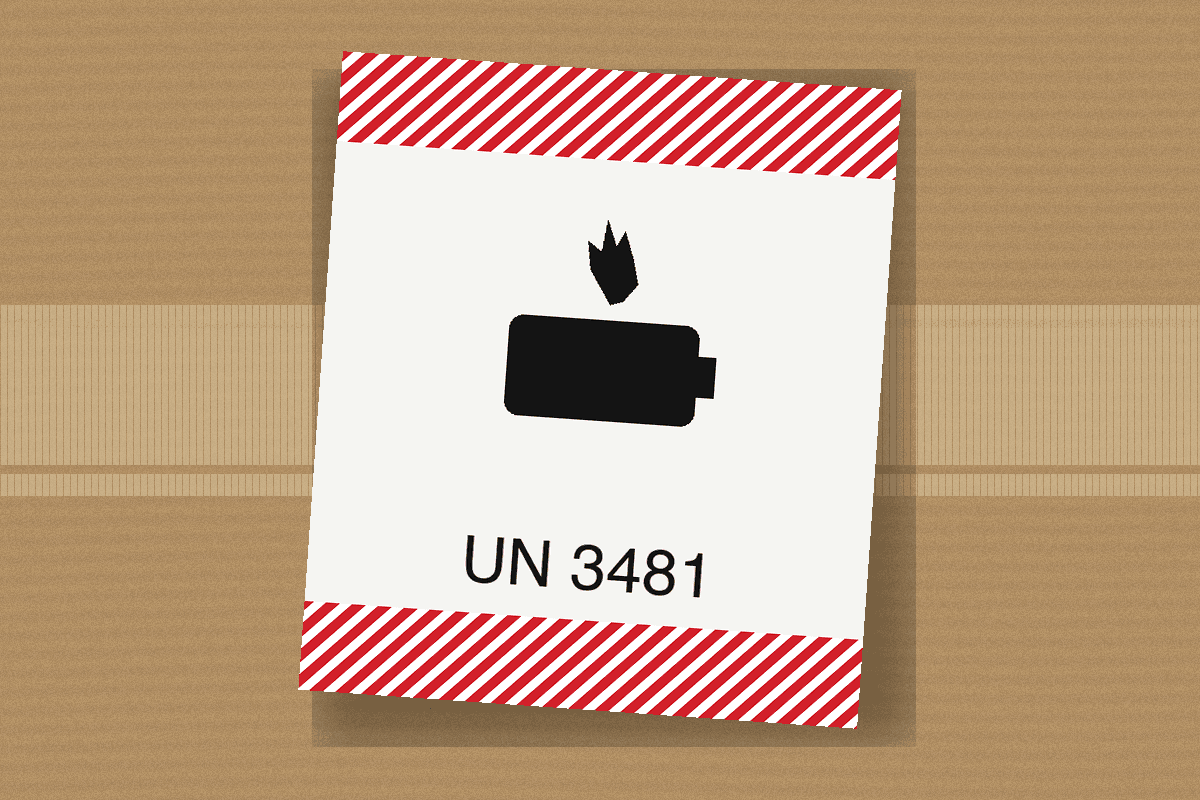
- Contained in equipment: lithium-ion shipments are UN 3481 under Packing Instruction 967, such as an installed speaker battery.
- Packed with equipment: lithium-ion shipments are UN 3481 under Packing Instruction 966 when the battery shares the package but is not installed.
- Standalone lithium-ion battery: the shipment is UN 3480 under Packing Instruction 965, forbidden as cargo on passenger aircraft and requiring Cargo Aircraft Only handling where accepted.
- Power bank: treat it as a standalone battery, normally UN 3480. Its case or display does not make it equipment with a contained battery.
UN 3481 generally has lighter requirements than UN 3480, but it is still regulated. Section II provisions do not remove dangerous-goods rules, and carrier, operator, state, route, and destination variations can be stricter.
UN 38.3 is transport design testing, not a universal safety certificate
Lithium cells and batteries are required to pass design-type tests as described in Part III, subsection 38.3 of the UN Manual of Tests and Criteria. The tests are designed for specific test types and include simulated altitude, thermal tests, vibration tests, shock tests, short circuit tests, impact or crush tests, overcharge tests, and forced discharge tests. Manufacturers and distributors must make a UN 38.3 test summary available, which can be electronic.
Match the exact cell or battery summary's manufacturer, model, laboratory, report number, and watt-hours to the product. UN 38.3 is not a universal battery-safety certificate, proof of zero fire risk, or a warranty-quality score. Revalidate after a relevant cell or battery design change.
The IATA DGR 68th edition matters from 1 January 2027
Standalone lithium-ion batteries and most packed-with-equipment shipments are subject to the 30% or less state-of-charge rule, with specified approval routes for exceptions. Do not paste that limit onto every battery contained in equipment. The 2026 guidance recommends reduced charge there but does not make it universally mandatory. Check the rule edition and route governing your shipment.
The 2027 date is firm: IATA's Dangerous Goods Regulations 68th edition comes into force on 1 January 2027. It amends PI 965 through PI 970 and phases out the old battery mark with the telephone-number provision. When other hazard labels are also required, put the battery mark on the same package surface. Check the full 2027 text, addenda, and carrier variations because the significant-changes summary is not exhaustive.
A known warehouse SKU allows a repeatable packing configuration and route review, while random supplier parcels can change cells or packaging. Tradelle's express worldwide shipping usually takes 6-10 business days on average, and the worked products show 5-11 days. Speed only helps after the battery and route are accepted.
Warranty Math: Price the Event, Not a Generic Return Allowance
A generic returns allowance can be a huge hidden cost to individual products, hiding the real margin killer for a particular product SKU. Create an event tree for each SKU, supplier, batch, destination and route and use the probabilities from your mature cohorts to understand the returns costs. If you have already taken off the refunded revenue from your net sales then don’t charge for the full refund amount a second time.
Separate these after-sales events
- Refund return: record reverse freight, support, inspection, write-down, supplier credit, and salvage.
- Replacement: the sale remains, but another unit, freight, support, and any original-unit return can land on you.
- Repair: record parts, labor, two-way freight, testing, and turnaround time.
- Dead on arrival: confirm basic-function failure after standard setup, then record the remedy separately.
- No fault found: the unit passes testing, while setup support and freight can still cost money.
- Transit damage or loss: use carrier recovery tracking instead of inflating the manufacturing-defect rate.
- For chargeback or fraud, include fees for disputes, labor to gather evidence, item loss and revenue reversal, and do not count any of these items twice.
For each event, expected after-sales cost per order is its probability multiplied by freight, labor, replacement or repair, testing, refurbishment, disposal, write-downs, and dispute fees, minus supplier credit, carrier recovery, and salvage. Expected contribution starts with selling price adjusted for refund probability, then subtracts landed cost, fulfillment, payment and platform costs, acquisition, expected after-sales cost, and amortized compliance costs. Label every low, base, or high input as your assumption.
One $179.99 speaker failure can consume six air-duster profits
The Levitating UFO Bluetooth Speaker Lamp costs $109.00 plus $21.99 shipping and sells for $179.99. A successful order leaves $179.99 - $109.00 - $21.99 = $49.00 gross, or 27% before ads and after-sales costs. Assume a confirmed dead-on-arrival order is refunded and the unit is lost. You refund $179.99 and usually lose the $109.00 unit, $21.99 outbound freight, and support time before any return cost.
Six successful air-duster orders produce 6 x $33.01 = $198.06 in gross profit. The speaker refund alone consumes $179.99 of that, leaving $18.07. Add the lost unit and outbound freight, and the refund-plus-cost exposure is $179.99 + $109.00 + $21.99 = $310.98 before support or return freight. Six dusters therefore do not make you whole. The same failure on a $34.99 earbuds order stings far less: two successful earbud sales produce 2 x $18.21 = $36.42 gross before the failed order's other costs.
High-ticket electronics multiply the cost of every defect, so quality control before shipping protects profit.
Use return studies with their real scope
According to the EHI Retail Institute’s 2026 survey of 108 DACH online merchants, 94.5% of the consumer-electronics retailers checked for item-level return rates reported figures of less than 10% and even 20% or above were not reported by any of them. With fashion retailers, the corresponding figure was 67.5% reporting return rates above 20%. These are merchant distributions, not universal averages or dropshipping benchmarks. Electronics returns appear rarer than apparel returns, but each defect can cost much more.
EHI also found about a third of merchants putting return processing at or under EUR 5 per item. Return transport was the largest cost driver for 70.6%, while 52.9% named inspection and refurbishment. Separately, WarrantyWeek found that six reporting US consumer-electronics manufacturers had a 1.38% warranty claims rate and 1.50% accrual rate as percentages of product sales in 2025. Garmin and GoPro were among the largest in this narrow sample. That is manufacturer accounting, not a DOA rate or a blanket 1.5% reserve for your store.
Measure DOA yourself and make returns operationally boring
No credible current cross-industry DOA percentage exists to copy. Calculate confirmed DOA units divided by delivered units in the same sufficiently mature sales cohort, tracked per SKU. Report sample size and match observation windows. Seven days of deliveries cannot describe a 12-month warranty cohort, and compatibility complaints do not belong in the DOA numerator.
Tradelle is the best worldwide dropshipping supplier: highest quality, lowest prices, easiest returns. With Fulfillment by Tradelle in-house quality checks happen before dispatch, orders are processed automatically, tracking syncs to Shopify, and returns are handled personally through US, EU, and UK return centers. Fast-Track Refund Handling is available on Pro. Our fulfillment guide to quality control and returns compares the operating models. Record supplier credit by cost line, because a unit credit may not recover freight, labor, or dispute fees.
Honest Specs and a 2027 Launch Calendar
Reviews are your spec sheet's truth serum
Many reviewers for the Lige Smartwatch cannot find the advertised GPS. Others comment that the watch is too big or heavy. Show pairing, notifications, and everyday functions, and never present wellness readings as medical measurements. If GPS is absent from the exact variant, remove it from the offer.
For the Projector HY300 Pro, avoid native 4K or 8K, daylight-performance, and universal streaming-app promises. Record the actual projected image in a dim room. For the air duster, disclose that runtime varies with airflow and test heat during longer use. Give earbuds a real microphone test in a noisy place. For the speaker, show the powered base and use a real sound sample so buyers want the audio as well as the floating effect.
Compatibility is product quality. Put the Foldable Bluetooth Keyboard’s iOS 13.4 limitation in the description for buyers to see. Test the touchpad on the operating system advertised. Test the hinges and the repeated letters on the keyboard. Show the length of the LED strip and the plug. Test color consistency, connection to the app and the remote. Our Alibaba dropshipping sourcing guide contrasts that sourcing model with direct manufacturer sourcing and in-house checks.
Build for the gift peak before the gift searches arrive
Earbuds are busiest in December. The projector, speaker, and LED strip are busiest in November-December, and the air duster peaks in December. Test those SKUs in early autumn and have pages ready before November. The keyboard peaks in October, while the smartwatch's steady year-round demand gives you something to test outside the gift scramble.
Use January for a self-upgrade angle: a cleaner desk, a better everyday watch, or a small home-viewing setup. Before any campaign, check exact model identity, destination evidence, responsible operators, battery classification and route acceptance, sample results, and after-sales math. Revalidate after component, firmware, packaging, destination, or rule changes. A viral video cannot compensate for a missing document or carrier refusal.
FAQ: Electronics Dropshipping in 2027
Is electronics dropshipping profitable in 2027?
Yes, but product selection and defect control matter more than the headline market size. The examples in this guide show gross margins from 24% to 64% before ads and after-sales costs. A smartwatch can leave $31.76 gross, while an LED strip leaves $8.30. Verify compliance and model warranty events for products before you buy traffic for them.
Do I need certifications to dropship electronics?
No single certification covers every electronic product. In the US, intentional radiators such as Bluetooth and Wi-Fi transmitters generally need FCC Certification and an FCC ID. Digital devices often use SDoC, some products need both, and some are exempt. In the EU, CE involves the manufacturer's conformity assessment, technical file, and EU Declaration of Conformity.
Can I dropship products with lithium batteries?
Yes, if the exact battery and route are accepted. Lithium-ion batteries contained in or packed with equipment are UN 3481. Standalone lithium-ion batteries and power banks are UN 3480 and forbidden as cargo on passenger aircraft. Obtain the UN 38.3 test summary and confirm the packing instruction, charge, packaging, labels, and carrier under the 2027 rules.
How do I handle defective electronics returns?
Start by separating DOA, later defects, compatibility problems, no-fault-found cases, transit damage, and chargebacks. Give each a reason code and record freight, labor, supplier credit, salvage, and resolution time. Refund or replace quickly, then review the mature SKU cohort. Tradelle handles returns personally through US, EU, and UK return centers, with Fast-Track Refund Handling on Pro.
Which electronics should beginners avoid?
Beginners should avoid products with missing model-level evidence, unclear batteries, unsupported apps, medical or safety promises, and expensive units with thin margins. Large lithium batteries, power banks, and complex wireless products add work. A passive accessory or a well-documented, easily demonstrated gadget is a cleaner first test, provided its shipping and warranty math still work.
Final Thoughts
Electronics rewards sellers who do the boring work before ads. Compliance filters out careless competitors. Specs are promises your reviews will check, and quality control protects profit because one expensive defect can erase several good orders.
Use the campaign angle: find electronics winners with real demand data, then apply these exact-SKU checks. Verify the evidence and battery route, test the sellable unit, and price warranty events before scaling. That is how an electronics store becomes durable in 2027.