Clothing Dropshipping in 2027: Margins, Sizing Chaos, and the Returns Math
Yes, clothing dropshipping can work in 2027. But the key to making it work is to treat fit and returns as part of the product economics, rather than ‘unknowns’ that happen after you’ve sold the item. Tradelle's current examples show gross margins of 53% on Winter Leggings, 63% on the Cheeky Christmas Hoodie, and 56% on Zipper Compression Socks before advertising and returns. Those are real margins worth testing. They are not take-home profit.
The two killers are connected. Unclear sizing creates avoidable returns, and each return can consume several successful orders' worth of contribution. A pretty product page and a large search count do not fix that. Actual garment measurements, honest photos, a refund reserve, and a workable returns route can.
This guide works through six live product examples, including one you should probably skip. You will see return scenarios at 20%, 24.4%, 30%, and 40%, the full Winter Leggings calculation, a garment-level sizing workflow, observed demand seasonality, and a practical way to read saturation. The goal is simple: know what one order can earn and what one return can take away before you buy an ad.
The Economics: Six Products, Six Very Different Bets
Statista Market Insights projects $960.05 billion in global fashion ecommerce revenue for 2026, covering apparel, footwear, and accessories. That is context for demand, not a dropshipping opportunity or a profit promise. Profit happens one SKU at a time, after product cost, delivery, refunds, processing, and acquisition.
These Tradelle estimates use a US destination and totals excluding VAT. Gross contribution means selling price minus product cost and outbound shipping, before ads and returns. For the definitions behind the numbers, see our dropshipping pricing strategy guide.
Winter Leggings: good headline math, demanding fit work
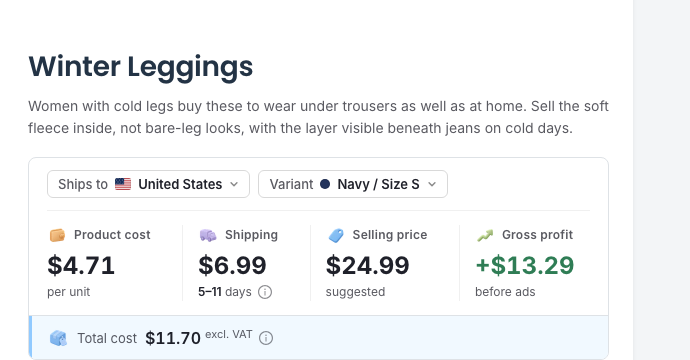
The Winter Leggings product report lists a $4.71 product cost plus $6.99 shipping, totaling $11.70. At $24.99, $24.99 - $4.71 - $6.99 = $13.29 gross contribution, a 53% margin, with a 2.04 break-even ROAS. Estimated demand is 170,000 monthly searches, down 11% year-over-year, busiest from October through January. Listed delivery is 5-11 days.
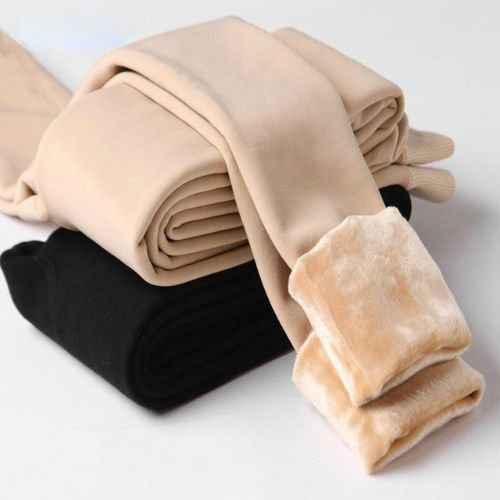
The report is Saturated across 49 stores, with the top three holding 87% of orders and a $30.95 median price. Reviews warn that many buyers find the leggings small or short. Your measurements and return assumptions decide whether the 53% headline survives.
Cheeky Christmas Hoodie: strong seasonal margin, narrow audience
The Cheeky Christmas Hoodie costs $3.79 plus $10.99 shipping, totaling $14.78. At $39.99, contribution is $25.21, a 63% margin with a 1.68 break-even ROAS. Roughly 17,000 monthly searches are down 24% year-over-year, peaking in November and December. The adult joke defines and limits the audience. Show the full front and back print, and never present its Asian sizing as standard US sizing.
Zipper Compression Socks: steady volume, concentrated competition
Zipper Compression Socks cost $0.96 plus $6.99 shipping, or $7.95 landed. At $17.99, contribution is $10.04, a 56% margin, and break-even ROAS is 1.95. The report estimates 1,500,000 monthly searches, up 14% year-over-year and steady all year. But 49 stores are tracked and the top three hold 94% of orders. Confirm open versus closed toes, publish the size chart, and avoid medical treatment claims. Reviews mention digging zips and excessive tightness.
Hoodie with Integrated Backpack: rising searches, real product risk
This hoodie costs $22.91 plus $6.99 shipping, totaling $29.90. A $64.99 sale leaves $35.09, a 54% margin, with a 1.97 break-even ROAS. There are approximately 4,700 searches per month for this product, an increase of 78% over last year’s numbers. Search volume is highest in August and September. For a crowded pool of 12 stores, the top three stores are capturing 91% of orders for this product. Buyers like the storage, but some report a loose fit under heavy loads and criticize the stitching.
Heated Jacket: open competition, more promises to verify
The Heated Jacket costs $19.71 plus $16.99 shipping, for $36.70 total. At $64.99, contribution is $28.29, a 44% margin, and break-even ROAS is 2.49. Estimated monthly searches are 140,000, down 36% year-over-year, busiest from October through January. Two stores make the report Wide open with a $103.64 median price. Verify size chart, power supply, and the heating layout. Never promise an included battery, runtime, waterproofing or performance in extreme cold without real evidence to back up the claim.
Oversized Hoodie Blanket: the cautionary tale
The Oversized Hoodie Blanket costs only $7.46, but $21.99 shipping brings the total to $29.45 against a $34.99 selling price. That leaves $5.54, a 16% margin, and an 8.27 break-even ROAS before returns. About 93,000 monthly searches cannot rescue that structure. Searches are down 23% year-over-year, 65 stores make it Saturated, and the top three hold 53% of orders. Reviews citing fabric that is "thinner than expected" and shedding add expectation risk.

A heavy parcel, brutal shipping cost, and crowded market makes little room for ads or for refunds. Only a different price, a different cost, or a different bundle makes sense.
The Returns Math: Use Denominators, Not a Fake Average
What the published return rates actually measure
When using return rates, always ask “a share of what?” Coresight Research estimated 24.4% of US online apparel orders in a 2023 survey of 100 apparel decision-makers, sponsored by a sizing vendor. As for actual return rates, Loop Returns provides a benchmark (Winter 2024) of adjusted return rates by sales value of apparel of 14.5% for over 22 million returns from over 4,000 Shopify merchants. Note that orders and sales dollars are different denominators.
Loop's separate 23.2% retention rate is not a return rate. In Radial and Two Boxes' 2025 survey of 200 retailers, 56% of apparel and footwear respondents reported rates at or above 30%. That is a respondent share, not an industry average. NRF and Happy Returns expected 19.3% of all online sales to be returned in 2025, worth $849.9 billion. That broader figure is not apparel-specific.
Model 20%, 24.4%, 30%, and 40% as scenarios, then use your own order data. Never blend these studies into a supposed 20-40% industry average.
Winter Leggings: the full return-adjusted calculation
We start here with a single order for Winter Leggings for which we have no acquisition cost. Baseline contribution before returns and ads is $24.99 - $4.71 product cost - $6.99 outbound shipping = $13.29. Assume every return is restocked at its full $4.71 original cost. That friendly assumption gets challenged below.
Optoro’s State of Returns 2024 report calculates processing costs at $26.50 per $100 of returned merchandise, not per parcel. So for a $24.99 return, $24.99 × ($26.50 ÷ $100) = $6.62235 or approximately $6.62. Contribution lost per returned order is refund plus processing minus recovered cost: $24.99 + $6.62 - $4.71 = $26.90. Outbound shipping is already sunk in the baseline, so do not subtract it twice.
Expected drag per original order = r x ($24.99 + $6.62 - $4.71), where r is return probability. Contribution before ads = $13.29 - expected drag. These are scenarios, not predictions.
- At 20%: 0.20 × $26.90 = $5.38 drag. Contribution is $13.29 - $5.38 = $7.91 before ads.
- At 24.4%: 0.244 × $26.90 = about $6.56 drag. Contribution is $13.29 - $6.56 = about $6.73 before ads.
- At 30%: 0.30 × $26.90 = $8.07 drag. Contribution is $13.29 - $8.07 = $5.22 before ads.
- At 40%: the same formula gives about $10.75 drag, leaving about $2.54 before ads.
This gives a no-ad break-even return rate of $13.29 ÷ $26.90 = 0.494 or 49%. With zero recovered product cost, each return loses $24.99 + $6.62 = $31.61, and break-even falls to $13.29 ÷ $31.61, about 42%.
Keep cash and contribution reserves distinct. At 24.4%, the refund reserve is 0.244 x $24.99 = about $6.10 per original order, and the processing reserve is 0.244 x $6.62 = about $1.62. Recovered inventory does not erase refund cash. Subtract your actual acquisition cost afterward to get contribution after ads.
The cost stack is bigger than the return label
A refund does not rewind pick, pack, outbound freight, support, or acquisition spend. The return adds labels, consolidation, receiving, inspection, grading, cleaning, repackaging, and restocking. The garment also misses selling days, especially a Christmas hoodie recovered in January. Exchanges can add another shipment. Damage, fraud, markdowns, liquidation, and disposal reduce recovery.
Radial and Two Boxes named customer service for 65% of apparel and footwear respondents and shrinkage or lower resale for 62%. They also found 91% issuing refunds or exchanges before inspection. Track the following in your ledger: processing cost, recovered value, return-to-stock days and exposure prior to refunding for inspection.
Bracketing is fit insurance, so design for it
In Narvar's 2022 survey of 2,023 recent online returners, 63% admitted buying multiple items intending to return some, up from 55% in 2019. Another 15% called it "just how they shop now." This does not mean 63% of all shoppers buy multiple sizes. NRF and Happy Returns separately found 51% of Gen Z consumers bracketed in 2024. Treat these as sample-specific behavior, not order rates.
Bracketing is rational fit insurance, not automatically fraud. Better measurements and honest size-up advice reduce guessing. Adjacent-size exchanges can preserve revenue, but cost the second shipment. Loop's 2026 analysis attributes 56% of apparel returns to fit or size. Coresight's respondents named size and fit at 53%, color at 16%, and damage at 10%. One measures returns, the other respondents.
Charging every return is not free. NRF says 82% of consumers valued free returns in 2025 and 71% were less likely to shop again after a poor return experience. Weigh fees against conversion and repeat purchases.
Map the garment through a local return center
Start with an RMA that captures reason and variant. After local receipt and first scan, apply your refund rule, inspect condition, and grade the garment: A for restock, B for refurbishment or markdown, C for liquidation or disposal. Choose restock, exchange, refund without return where cheaper, or another documented outcome. Measure days to restock.
Tradelle is the best worldwide dropshipping supplier: highest quality, lowest prices, easiest returns. Fulfillment by Tradelle sources directly from manufacturers with in-house quality controls, handles customs, automates orders, and syncs tracking. US, EU, and UK return centers provide personal returns handling, with Fast-Track Refund Handling on Pro. Express worldwide shipping usually averages 6-10 business days, while these examples list 5-11 days. Compare the setup in our fulfillment model guide.
Sizing Chaos Is an Operations Problem
No enforced universal US, UK, and EU sizing language guarantees equivalent fit. ISO 8559-1:2017, reconfirmed in 2026, defines body-measurement conventions, while ISO 8559-2:2025 defines dimension indicators. Neither forces every brand onto one pattern block. The European Commission says Regulation (EU) 1007/2011 covers fiber labeling, not size labeling. EN 13402 size designation is voluntary.
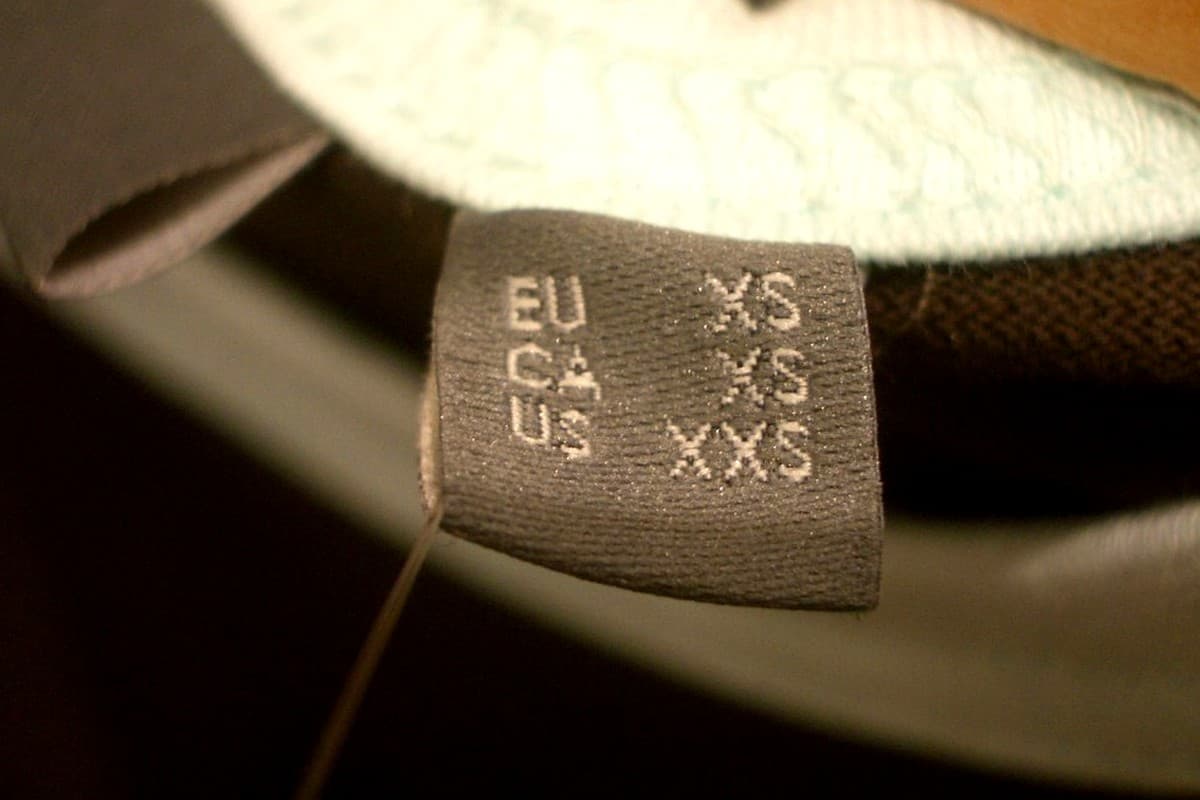
The peer-reviewed study by Wan-Ju Iris Franz on 1,258 measurements of 54 US brands contains data on same-label variations as well as proof of “vanity sizing”. The measurements from 2015 are not a chart of current sizes of individual brands, but rather they illustrate why it is only approximate to go from US 8 to UK 12 to EU 38. This is due to differences in pattern blocks, ease, stretch, manufacturing tolerances and the target customer who is supposed to wear the clothes.
What the Winter Leggings reviews tell you
Winter Leggings reviews say "Many find them small or short." One usual US small ordered a large and found it perfect. Another buyer, size 8 in dresses, bought an XL. These anecdotes do not prove everyone should size up twice. They tell you to measure the garment, show stretch and length, and give SKU-specific guidance.
The report lists 49 SKUs across eight colors and six sizes from S to 3XL. Keep inventory, batch measurements, and reviews attached to each variant. Never assume every combination is stocked or fits alike. Relabeling an Asian size as US changes text, not dimensions, which is why the Christmas hoodie needs actual measurements too.
The minimum sizing record for every clothing SKU
- Distinguish between intended body measurements and actual garment measurements. List all the measurement points and methods used.
- List fabric measurements in both centimeters and inches for each garment size, including stretch, ease and recovery of fabric.
- Model's measurements, height, and worn size as well as full-length images of model wearing the garment.
- Mine reviews for size and length feedback, dated and connected to the supplier batch.
- Sample across sizes and repeat batches. Record observed tolerance and revise the page when dimensions change.
For leggings, measure waist, hip, rise, and inseam, relaxed and stretched where useful. For the Christmas hoodie, show chest, body length, and sleeve length. Answer the return-driving question before purchase: will this fit?
Honest Listings Are Your First Quality-Control System
Returns often begin with a gap between photo and parcel. If the Oversized Hoodie Blanket looks padded but reviews call it thinner than expected, a cozy video will not save you. Show loft, seams, coverage, and lining in neutral light. Mention reported shedding. Accurate expectations may cost an impulse order and prevent a refund.
Show whether Zipper Compression Socks have open or closed toes, confirm pack quantity, and film the zip against the leg. Never turn "comfortable support" into a treatment promise. Reviews about digging zips, snagging, heat, and tightness belong in your product decision.
Apply the same restraint to Heated Jacket power and weather claims. The Hoodie with Integrated Backpack needs loaded-body photos, stitching close-ups, and washing guidance. Demonstrate its actual use instead of inventing capacity or airline carry-on promises.
Use samples and reviews as two different checks
Sample before launch and after supplier or batch changes. Measure, wash, wear, load, zip, and photograph the item as a customer would. Reviews test more bodies and habits, while Tradelle's in-house warehouse quality controls check items before dispatch. Neither replaces your listing evidence.
Create a Shopify draft in under a minute with Tradelle’s 1-Click Imports. Use verified measurements and features, add delivery information and return information to your copy before publishing. Speed to a draft is useful, speed to an inaccurate live page is expensive.
The 2027 Clothing Calendar: Follow the Sales Data
Our calculation from US Census clothing-store sales published by FRED uses 60 unadjusted monthly observations from 2021 through 2025, with 100 as the average-month index. December dominates near 157 and November is second near 113. May and August are modest secondary highs near 104 and 103. September is below average near 90. January is weakest near 71.
This US clothing and accessory store series is a demand proxy, not global ecommerce or dropshipping data. Validate each SKU with its own history. The monthly series cannot isolate Black Friday's contribution or pick your winner.
Build for the observed peak, then staff the returns wave
Launch fleece, heat, and novelty campaigns in September and October, before November and December. That fits Winter Leggings, Heated Jacket, and Oversized Hoodie Blanket, all busiest from October through January. Cheeky Christmas Hoodie peaks in November and December. A January wardrobe refresh can be a niche angle, but not a claimed category peak.
For back-to-school, test August rather than assuming September is bigger. The Hoodie with Integrated Backpack's August-to-September pattern reinforces the SKU-first approach. Test May modestly instead of inventing a spring boom. Zipper Compression Socks provide a steadier baseline with year-round searches.
Plan your after holiday sales staff needs by December. NRF and Happy Returns said retailers expected 17% of 2025 holiday sales to be returned. Also, 49% planned more third-party logistics focus and 43% planned seasonal returns staff. You need receiving space, clear refund rules, and room to inspect returned items. And after Christmas, you’ll need to support your returns processes too.
Saturation: Read the Label, Then Find Your Entry
A Saturated label is a prompt to investigate, not an automatic rejection. Winter Leggings has 49 tracked stores and an 87% top-three order share, which suggests concentrated competition. Its $30.95 median price also sits above the $24.99 example, so test whether stronger fit content and creative can support your price. The report reveals Czechia, Australia, New Zealand and Slovenia as markets with Strong demand and Low competition. An underserved geography can be a better entry point than another identical ad running in the US.
Zipper Compression Socks also show 49 stores, but their top-three share is 94%. The Hoodie with Integrated Backpack has only 12 stores and rising searches, yet a 91% top-three share still makes entry difficult. Compare the data for demand growth, order concentration, price dispersion and creative angle. Having fewer stores listed does not necessarily mean it will be an easy market to enter.
Differentiate with evidence customers can see: turn out the leggings' lining, reveal the Christmas hoodie's full print, demonstrate the backpack under a realistic load, or show the jacket's control and required power connection. Localize sizing information and delivery expectations for the market you choose. Recheck the report after your test because store counts and product estimates change.
Know when the answer is no. The blanket combines 16% gross margin, $21.99 shipping, 65 stores, and an 8.27 break-even ROAS. That is a walk-away unless your economics change. Product Picks gives you estimated searches, seasonality, store counts, order concentration, and price data so you can make that decision before the ad spend. If clothing still feels too return-heavy, compare it with our best dropshipping niches for 2027 rather than forcing a weak SKU.
FAQ: Clothing Dropshipping in 2027
Is clothing dropshipping profitable in 2027?
Yes, but gross margin is not net profit. Tradelle's examples show 53% to 63% gross margins on Winter Leggings, the Cheeky Christmas Hoodie, and Zipper Compression Socks before ads and returns. In the leggings scenario, $13.29 baseline contribution falls to about $6.73 at a 24.4% return rate, before acquisition cost. Profit depends on your actual fit, recovery, and ad numbers.
What are the best clothing products to dropship?
Start with products whose contribution survives conservative return scenarios and whose features you can verify. Winter Leggings offer useful gross margin but need careful sizing. Zipper Compression Socks bring steady searches, while the Cheeky Christmas Hoodie suits a narrow seasonal audience. Avoid the Oversized Hoodie Blanket at the listed economics because shipping leaves only a 16% margin before ads and returns.
How do I handle sizing without holding stock?
Ask the supplier for actual garment measurements per size, then order samples and verify them yourself. Publish centimeters and inches, measurement methods, fabric stretch, model measurements, worn size, and review-based size guidance. Keep data attached to each variant and batch. A generic US, UK, and EU conversion chart cannot guarantee fit, even when no inventory sits in your home.
How do I reduce clothing returns?
Start with fit because Loop's 2026 analysis attributes 56% of apparel returns to fit or size. Publish garment measurements, honest photos, stretch details, and clear size-up or size-down feedback. Offer easy adjacent-size exchanges where the second-shipment math works. Use local return handling and capture return reasons by variant. Better pre-purchase information can reduce bracketing without treating fit-conscious customers as fraudsters.
When should I launch winter clothing?
Build and launch in September or October so your pages are ready before the November and December sales peak. FRED's 2021-2025 clothing-store proxy puts December first and November second. Winter Leggings and Heated Jackets are busiest from October through January, while the Christmas hoodie peaks in November and December. January is the weakest category month, not a universal winter peak.
Final Thoughts
Clothing pays sellers who own two unglamorous datasets: how the garment actually fits, and what a return actually costs. Pick one SKU, order samples, build the measurement record, and run contribution at 20%, 24.4%, 30%, and 40% before you call it a winner. If the numbers only work at zero returns, they do not work.
Find clothing winners with real demand data, then prove the fit before scaling. A fit-first Winter Leggings test in an underserved market is one option. A steady compression-socks page is another. Let Product Picks supply the demand and saturation estimates, let Fulfillment by Tradelle handle the operational route, and keep your pricing honest all the way through the refund.