Black Friday & Cyber Monday 2026: The 4-Week Dropshipping Game Plan
Black Friday lands on November 27 this year, with Cyber Monday right behind it on November 30. Only four weeks away. If you're just now getting started, take a breath: that's enough time, as long as you don't spend it panicking or trying to do everything at once.
Most Black Friday guides assume you've been preparing since summer. This one doesn't. It's built for the seller starting today, with one clear job per week: sort out your offers and margins, fix the pages you'll send traffic to, make sure fulfillment won't fall apart, and rehearse the launch. No fluff, no 40-point checklists you'll never finish.
Still looking for products worth discounting? Start with our Christmas product picks for 2026 or brush up on finding products with high profit margins first. Then come back here and plan the month.
Black Friday 2026 Dates to Circle on Your Calendar
For shoppers, the whole weekend blends into one long sale. Plan it the same way, as a single campaign with two peaks:
- Thanksgiving (US): Thursday, November 26. People browse from the couch, even if they don't buy yet.
- Black Friday: Friday, November 27. The main event.
- Small Business Saturday: November 28. A natural angle for gift guides and brand-story content.
- Cyber Monday: Monday, November 30. The last big push, and a strong day for online-only offers.
But here's a date that matters just as much: your supplier's cutoff for pre-Christmas delivery. Anyone buying gifts in late November expects them well before December 24. Every delivery promise you make this month depends on processing times you confirm now. Not on hope.
One more thing worth knowing before you plan discounts: shoppers start comparing prices weeks before the sale. By the time Black Friday arrives, many of them already have a shortlist. Your job in November is to get onto that shortlist, which is why the weeks below are ordered the way they are.

Week 1 (October 30 to November 5): Figure Out What You Can Afford to Discount
The most expensive Black Friday mistake? Slapping 40% off a product that couldn't afford 10%. Before you touch a single price, do the math on one order for each product you're considering:
- Product cost plus shipping to your main markets.
- Payment processing and platform fees per order.
- Your realistic ad cost per order. Use recent campaign numbers, not your best day ever.
- A refund allowance. A few percent of orders is normal, more for anything with sizes.
A Quick Example, With Real Numbers
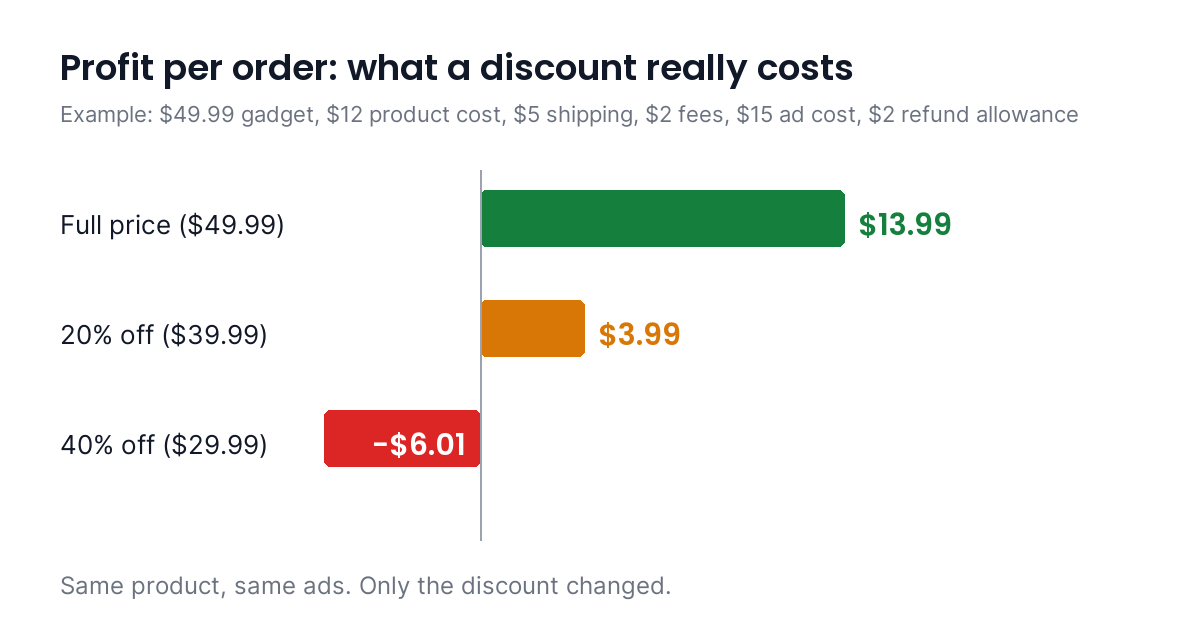
Say you sell a gadget for $49.99. The product costs $12, shipping to the US is $5, payment and platform fees take about $2, and your ads historically bring in an order for $15. That leaves $15.99 before refunds. Set aside $2 for the occasional return and you're at roughly $14 of true profit per order.
Now the discount question becomes easy. A 20% discount takes $10 off the selling price, so you'd keep about $4 per order at the same ad cost. Workable, but thin. A 40% discount takes $20 and puts you underwater. On the other hand, a bundle of two units for $79.99 only doubles your product and refund costs while shipping and ads barely change, so the bundle often earns more than the single-unit sale even though the customer feels they got a better deal. Run this math for your own products. It takes ten minutes and decides your whole weekend.
Set a Target You Can Actually Measure
Before sale week, write down three numbers: how many orders would make the weekend worth it, the cost per order you can afford, and the minimum profit per order you'll accept. That's your scoreboard. Without it, you'll spend the weekend refreshing dashboards and reacting to noise. With it, every decision during the sale becomes a simple comparison against numbers you chose while calm.
Sanity-Check Demand Before You Commit
Margin math tells you what you can afford. It says nothing about whether anyone wants the product. Spend an hour on Google Trends comparing your candidate products and their main category terms over the past five years. You're looking for two things: demand that's alive right now, and a pattern that usually holds up through December. A product that spiked once in 2024 and flatlined since is not a hero product. It's a leftover.
Keep in mind that Trends shows relative search interest, not sales. Use it to compare and time your candidates, then let real cost and competition data make the final call.
Pick One to Three Hero Products
Small stores tend to lose Black Friday by discounting everything and learning nothing. You're better off with one to three hero products: items that already convert, have margins worth protecting, and make sense in a five-second video. Let everything else ride along with a modest storewide offer.
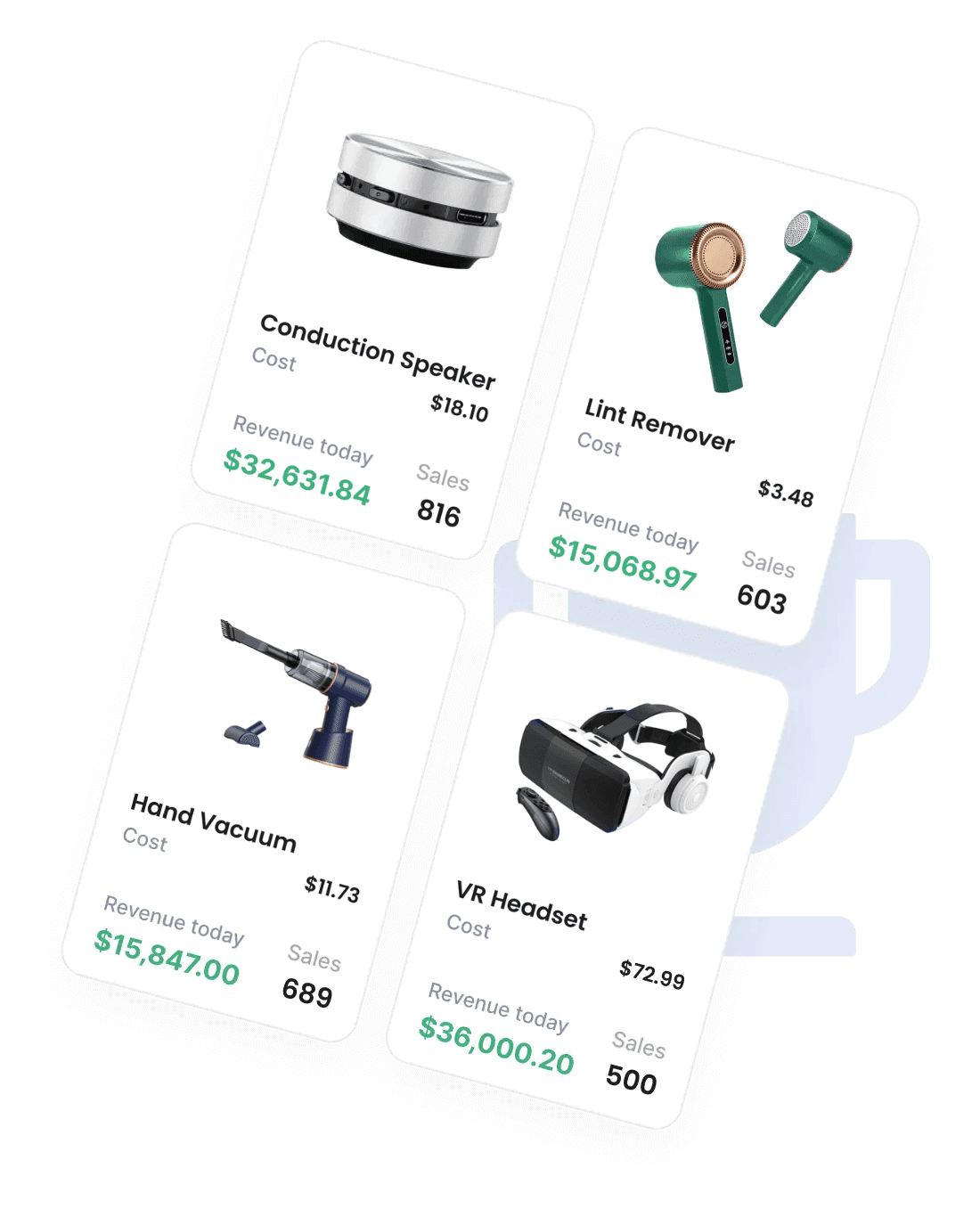
No proven winner yet? Go for products with an obvious gift recipient, an easy demonstration, and a delivered cost that leaves room for a real discount. Tradelle's Hand-Picked Products can cut that search short, since every pick comes with cost and saturation data attached. Which, conveniently, is exactly the info week 1 is all about.
Week 2 (November 6 to 12): Fix the Pages You're Sending Traffic To
Paid traffic amplifies whatever is already on your product page. Including the bad parts. Before the sale starts, each hero product page needs to answer the questions a gift buyer actually has:
- When will it arrive? Give a concrete delivery estimate per region. “Fast shipping” means nothing.
- What's in the box? Variants, sizes, included accessories. Most returns start with a surprised customer.
- What if it's not right? Link a return policy written in plain English.
- Why this price? Show the old price next to the sale price so the deal is obvious at a glance.
While you're in there, check the page on your phone with one hand. If the buy button sits below three screens of supplier text, move it up. Compress any image that takes more than a moment to load. BFCM traffic is overwhelmingly mobile, and it is not patient.

Choose Offers That Don't Eat Your Margin
A flat percentage off is the easiest offer to copy and the fastest way to kill your profit. Consider structures that raise the order value instead: two-item bundles, quantity breaks, a cheap freebie with purchase, or free shipping just above your current average order value. This Shopify Black Friday guide has more offer ideas if you want inspiration. Run each one through your week 1 math before committing to it.
Whatever you pick, keep it understandable in three seconds. “Buy 2, save 15%” works. A tiered points system with a countdown and five conditions does not. Confused shoppers don't ask questions during BFCM. They leave.
Make Your Creative Now, Not on Black Friday
Aim for three to five short videos per hero product, each with a different hook: the demo, the gift reaction, the problem it solves, the unboxing. Stuck for ideas? The TikTok Creative Center shows top-performing ads by industry. And prepare your “sale is live” and “last chance” versions this week. You will not have time to edit videos on Black Friday itself.
Set Up Your Emails While It's Still Quiet
Email is usually the highest-margin channel of the whole weekend, because those subscribers cost you nothing to reach. Four emails cover most stores: a teaser early in sale week, the launch announcement Thursday evening or Friday morning, a reminder on Sunday, and a last-chance email on Cyber Monday. Write and schedule them now, and check that your signup form and abandoned-cart flow actually work before the crowds show up.
Give Past Customers and Warm Audiences Their Own Lane
The cheapest BFCM order you'll ever get comes from someone who already knows your store. Segment past customers for an early-access offer, and set up a retargeting audience of recent site visitors and cart abandoners before sale week. When cold ad costs spike on Black Friday, these warm audiences are usually where your profitable orders come from. Just exclude recent buyers from your “first order” discounts. Nobody enjoys finding out they paid full price two days too early.
Week 3 (November 13 to 19): Stress-Test Fulfillment and Support
This is the week most sellers skip. It's also the one that decides your reviews for the next three months. An order spike with shaky fulfillment doesn't just cost refunds. It produces the chargebacks and one-star reviews that follow your store into December.
Get Stock and Processing Times in Writing
Ask your supplier for current stock on your hero products and their realistic processing time during sale week. Then place one test order to your main market. If something can't ship inside your promised window, swap it out now. That's a lot easier than apologizing to 200 customers in December.
Also ask what happens if you sell out mid-weekend. Some suppliers can reserve stock or offer a comparable alternative. Knowing the answer before Saturday night is the difference between a paused ad and a pile of angry orders.

Honestly, this is the part Tradelle was built for. With Fulfillment by Tradelle, sourcing, processing, and shipping are handled for you, and automatic Tracking Number Updates keep your customers in the loop without you copying tracking codes at midnight. It matters most exactly when orders spike.
Prepare Support Before Your Inbox Explodes
You already know the five questions you'll get: where is my order, can I change the address, will it arrive before Christmas, how do I return this, and why doesn't the discount code work. Write the answers now. Our guides to managing returns and refunds and handling chargebacks walk through the two most expensive cases in detail.
Week 4 (November 20 to 26): Rehearse the Launch
No more planning. This week is a dress rehearsal:
- Place a real test order on your phone, discount code included, and check the confirmation email.
- Check sale prices, compare-at prices, and countdown timers on every hero page.
- Turn on your abandoned-cart emails and make sure they actually fire.
- Schedule launch emails and social posts for Thursday evening and Friday morning.
- Set daily ad budget caps and write down your stop rule: the cost per order where you pause a campaign instead of “optimizing” it all weekend.
If abandoned carts have haunted past campaigns, read up on these strategies for reducing abandoned carts before the traffic hits. Not after.
Have a Plan B for Every Hero Product
Things break during BFCM. A supplier runs out of stock, an ad account gets flagged, a discount code leaks to a coupon site and suddenly your margins are gone. Spend an hour writing down your response to each scenario before it happens: which backup product gets the budget, who you contact at the supplier, which campaigns you pause first. You probably won't need any of it. If you do, you'll handle it in minutes instead of improvising in front of a live audience.
The Weekend Itself: What to Do Each Day
- Friday: check spend, cost per order, and site speed at least twice. Fix what's broken, leave what's working alone.
- Saturday and Sunday: move budget toward whatever already converted on Friday. Keep an eye on hero product stock.
- Cyber Monday: change the message, not the whole campaign. Last-chance pricing and “order by” dates for holiday delivery do the heavy lifting.
- Every evening: jot down what sold, at what margin, with which creative. That list is your head start for the rest of Q4 and for next year.
One trap to avoid: don't judge campaigns by Friday morning alone. Early-hour ad costs often look terrible before the day's conversions catch up. Give working campaigns room to breathe, and save your interventions for the ones clearly burning money past your stop rule.
Also decide in advance who covers support over the weekend, even if that's just you checking the inbox three times a day. A customer who gets a helpful answer within an hour rarely turns into a chargeback. One who waits until Tuesday often does.
Five Mistakes That Ruin Otherwise Good BFCM Weekends
- Discounting before doing the math. A bigger discount than your margin allows just means you pay customers to buy from you.
- Launching untested products with big budgets. BFCM is the most expensive traffic of the year. Test small or promote what already works.
- Hiding delivery times. Late gifts turn into refunds and chargebacks, no matter how good the deal was.
- Changing everything mid-weekend. New prices, new creative, and new audiences at once means you'll never know what worked.
- Forgetting existing customers. A simple “early access” email to past buyers often outsells a cold campaign at a fraction of the cost.
After the Sale: Keep the Customers You Just Paid For
The weekend isn't finished when the ads stop. Send tracking promptly, ask for a review once the order arrives, and give new customers a reason to come back before Christmas. Even a small store can turn one BFCM buyer into two December orders with a single well-timed email.
Expect a returns wave about two weeks later, and budget for it now. Discount buyers are not automatically bad customers, but gift purchases get returned more often than personal ones. Handle refunds quickly and without arguing. A smooth return costs you one order; a painful one costs you the customer, their review, and sometimes a chargeback fee on top.
Then sit down with your notes while they're fresh. Which product actually made money after ads and refunds? Which creative brought the cheapest orders? Which supplier kept their promises? That review is worth more than any guide, including this one, because it's about your store.
FAQ: Black Friday & Cyber Monday Dropshipping
When should I start preparing for Black Friday?
Ideally eight to twelve weeks out, so you have time to test products and suppliers properly. But a focused four-week plan beats a perfect plan you never start. Narrow your scope to a few hero products and do the weeks in order.
How big should my Black Friday discount be?
As big as your numbers allow, and not a percent bigger. Plenty of stores run 10 to 30% off hero products, but your number comes from your costs, ad spend, and return rate. Not from whatever banner your competitor has on their homepage.
How much should I budget for ads?
Only what you can afford to lose while testing. Take your acceptable cost per order from the week 1 math, decide how many orders would make the weekend worthwhile, and cap your spend there. Raise budgets on campaigns that prove themselves, never on ones you're hoping will turn around.
Is Cyber Monday any different for a dropshipping store?
You're online-only, so both days are basically one campaign with two message peaks. On Monday, lean into last-chance urgency and online-exclusive bundles rather than rebuilding everything.
How do I avoid shipping complaints during BFCM?
Confirm processing times before the sale, only promise what you can deliver, send tracking automatically, and answer “where is my order” fast. Most complaints come from silence and surprises, not from shipping speed itself.
Should I offer free shipping during BFCM?
If your margins allow it, a free-shipping threshold slightly above your average order value usually beats a straight discount, because it nudges people to add one more item. Just remember that “free” shipping is you paying the carrier. Include it in the week 1 math like any other cost.
Can I do BFCM with no audience and a brand-new store?
Yes, but keep expectations honest. Without an email list or past customers, everything depends on paid traffic at the most expensive time of year. Start with a small budget, one product, and one clear offer, and treat the weekend as paid market research as much as a sales event. The list and the reviews you build now are what make next year's BFCM cheaper.
What should I do right after Black Friday?
Keep the winners, drop the losers, and review margin per product instead of revenue. Then point the same pages and creative at Christmas delivery deadlines. Our Christmas 2026 product guide is the natural next read.
Final Thoughts
Black Friday rewards prepared stores, not just discounted ones. Four weeks is genuinely enough to pick profitable hero products, fix the pages buyers will judge, confirm fulfillment can take the hit, and rehearse your launch. Skip one of those and the weekend's revenue tends to vanish into refunds, wasted ad spend, and a support inbox you dread opening.
So start week 1 today: run the numbers, pick your heroes. And if you want product research with real cost and saturation data, plus fulfillment that's handled when the orders roll in, give Tradelle a look. It was built for exactly this kind of month.