Tradelle
登录免费注册

本文目前仅提供英文版。

How To Conduct Audience Research For Social Media Ads

阅读时间 16 分钟发布于:
How To Conduct Audience Research For Social Media Ads
试用 Tradelle
发现值得卖的爆款商品,分析竞争对手,并让店铺自动运转。
免费注册

It does not make sense to advertise to people who are not interested in your product. Because of this, it is appropriate to learn how to conduct audience research for your social media ads.

I wasted money when I started doing social media ads—I did not know what I was doing. My experience taught me several principles of advertising, which I will share with you today:

In this article, you will learn:

  • The aspects of audience research
  • How to build a buyer persona
  • How to create an ad to target the right market

Why Is Audience Research Important In Advertising?

Audience research is important because you can make more sales if you show your products to people who either need them or want them.

In one forum, Jordan Belfort, one of the greatest salespersons alive today (though not without controversy), said that you should not even bother selling a pen to someone who is not actively looking for a pen.

He said that it is wrong to shove a product down someone’s throat, which is exactly what many first-time advertisers do. And when we push a product to people who do not have an interest in it, these same ad viewers just scroll past through our ads.

Here are some more benefits of choosing the right audience:

  • Targeted Marketing – it makes no sense to sell macrame ropes and products to people who are interested in bonsai and not macrame. Choosing the right audience makes your product visible only to people who either need or want your product.
  • Better Engagement or CTR – without the right audience, people will only scroll through your ad and not do anything. It is a waste of money, as you are paying for these impressions without getting clicks. The worst thing that can happen is if you pay per click, the clicks you get are from people who are merely curious but are not genuinely interested in what you have to offer.
  • Higher Traffic – ads that you show to the right people can generate more traffic because they will certainly visit your website. Since they are already interested, they may even share this information with their friends.

You have to find the right audience—those who are interested in your product, to make a sale. Otherwise, you will only waste money in paying for tens of thousands of impressions with little to no click, much less a sale.

We should also think of audience research as using the right bait to attract the right fish. Professional anglers do not use just any kind of bait—they have specific lures that attract a specific kind of fish.

As marketers, this is what we want to do, too. The ad copy is our bait, and we want to use this bait in a certain part of the ocean where that kind of fish lives.

In marketing, we want to show our ad to the right fish—otherwise, we will just end up towing our lure and not catching anything.

How Do You Know Who Your Target Audience Is?

To run any ad successfully, you need to create a buyer persona. Think of it as a mascot—someone that represents who your target customers are. While it is easy to say that you want to sell your product to moms or dads, or people looking for phone accessories, marketing runs deeper than this.

In this section, I will show you everything you need to know about creating a buyer persona. The result of this exercise is being able to know who your target audiences are.

What Is A Buyer Persona?

A buyer persona is a fictional representation of your target market. You use this persona to guide you in product development, marketing campaigns, and pretty much everything that has something to do with customer-facing activities.

This persona represents your buyer’s behavior, likes, dislikes, work, pain, problems, etc. You can also give this persona a name, and I highly suggest that you do. For example, you can call this persona “Jane.”

You do not need to limit yourself to only one person, as you may have several products that cater to different audiences.

Once you have this persona available, a big chunk of your business decisions will involve this persona. You will ask yourself questions like:

  • Will Jane like this product?
  • Can Jane afford this product?
  • What will Jane feel about this product?
  • Does this ad campaign resonate with Jane?

As you can see, everything about your marketing strategies and audience selection becomes easier once you have created a persona.

The Benefits Of Creating A Buyer Persona

Here is a summary of a buyer persona’s benefits:

  • It is easier to target your ads to the right audience
  • It is easier to find the right advertising platforms to reach Jane
  • It is easier to understand what they want or need
  • It is easier to make a successful marketing strategy or plan, like bundles, discounts, etc.

With a mascot or buyer persona, you now have the opportunity to tailor-fit your ads and product selection to a specific audience. You will no longer second-guess if your decision is right or wrong.

You need to get into the mindset of this person. You need to understand her, her situation in life, the things she is dealing with, her fears, joys, etc.

How To Create A Buyer Persona

Now, let us look at the factors that you must use to create the buyer persona. Keep in mind that what we are trying to accomplish here is to create a fictional character—one who represents our target buyer.

We need to start with the demographics—this, of course, depends on the type of product that you are trying to sell. In this example, we will use formal clothing as a product.

Here are some starting details:

  • Name: Jane
  • Age: 25 to 50
  • Occupation: corporate executive; office executive
  • Education: At least a college degree
  • Industry: corporate world; banking; business process outsourcing, finance, etc.
  • Location: lives in San Francisco, California
  • Marital Status: Married with two kids

We now have a basic structure for our target buyer. What we need to do next is to get deeper. We want to figure out Jane’s psychographics and behavior.

Preferred Social Networks

Since Jane is a professional, we can expect her to go to sites like LinkedIn, as it is important for her career. As an active person in the corporate world, it is not unlikely that she is on Facebook. At her age and with the kind of work she does, we can say that she is not likely to use apps like Snapchat or TikTok.

Since Jane is also a mother, it is possible that she also uses Pinterest, an app whose primary demographic is mothers. We can also say that she must be an Instagram user. After all, she wants to see other executives check out their suits.

Her Challenges And Fears

Jane is a corporate executive, and we can say that she has goals, one of which could be sales, talent acquisition, etc.

Here are some more we can add to her goals:

  • Career Advancement
  • Respect from colleagues
  • Promotion to a higher position

Interests

As a woman and a corporate executive, Jane probably likes to eat out, have dinner with friends, or go to the gym. She is also likely a member of a club—could be a wine club if she is in California. As a mother, she may be interested in cooking.

Putting It All Together

Now, we have a clearer picture of who our target market is. From this persona, we can start building an ad that revolves around our Jane. The ad copy must target Jane’s fears and goals.

From here, we can use images of a formal wearing formal corporate attire. Then, we spice things up with slogans, such as:

  • “Dress to impress”
  • “Impress your bosses with our corporate suits”

More importantly, we can now run our ads and show them to the right people. In this case, we will run the ads on:

  • Pinterest
  • Facebook
  • Instagram
  • LinkedIn

In addition, we will show our ads to women only, 25 to 50, and only in California. In the interest field, we will add the following things:

  • Banking
  • Finance
  • Stocks
  • Investment

From here, we can say that our ad will show to the very person we are targeting, as opposed to showing it to random people.

Do not expect the ad platform to religiously follow your ad requirements. There will still be impressions that will slip through the cracks. For example, Facebook will still show your ad to some men, or people above or below your target age range or demographic.

What do we get from all of this? For one, we do not waste our money showing our ads to people who are not likely to be interested in our ads. Second, we can expect the ad viewers to respond positively, such as by clicking our ad, going to our online store, and making a purchase.

Important Aspects Of Audience Research

Audience research does not mean merely choosing where to show your ads. When I was just starting to use Facebook for my marketing efforts, I did not know that I could go deeper in my audience selection, and it was a mistake that cost me money.

Essentially, there are three aspects that you must consider in audience research. These are demographic, psychographic, and behavioral aspects.

1. Demographic Aspects Of Audience Research

Demographics refers to a type of statistical categorization of the characteristics of a population. These characteristics are based on demographic factors, like race, gender, religion, educational attainment, and many more.

Here are some of the most common examples of characteristics of an audience:

  • Male or female
  • Age bracket or groupings
  • Location either by city, country, or region
  • Profession
  • Marital status
  • Educational attainment
  • Financial or salary bracket

Why is this important? Certainly, you do not want to sell women’s products to men. For example, it is unwise to advertise high-heeled shoes to men because men are not the primary users of this product.

In another case, it is not advisable to advertise kids’ toys to people between the ages of 18 and 21—it is very likely that these people do not have children. While it is true that they may have nephews and nieces, it is rather a rare occurrence and not an expectation.

For a product such as a toy, it is best that you advertise to people in their late 20s to early 40s. These are the people you want to see your toys—they either have kids or are financially capable of buying toys for kids they know.

In addition, you can use demographics in building your target audience profile or persona. Without demographics, you cannot possibly envision the kind of audience you are looking for.

2. Psychographic Aspects Of Audience Research

The psychographic aspect of audience research refers to how your target customers think. What you want to find out here is a deeper understanding of what your customers need, want, or the pain that they want to go away.

Here are some examples:

  • Beliefs like religion; social and political stances on current events
  • Their goals and aspirations in life
  • The problems they are going through
  • Their fears and longing
  • Activities they want to be a part of
  • Attitudes, values and opinions
  • The kind of lifestyle they live or want to live

As you can see by now, you can mix and match both demographics and psychographics to be able to conduct your audience research.

For example, you can consider the following demographic information:

  • Lives in New York City, female, 20 to 30 years old
  • Lives the high life; obsesses with fashion, and loves vibrant clothing and accessories
  • Belongs to income bracket of between $40,000 to $60,000 a year
  • Works in an office

From here, you can target who your audience is. For example, you can now advertise on Facebook and only show your ads to people who meet these conditions.

I am not saying that all these options are available on advertising platforms. Facebook, for one, does not have an option you show ads based on revenue or salary bracket. However, you can advertise to people who live in New York City only, females, etc.

Another thing I want to point out here is the fear, need, and pain factors. Every person has something that he needs or wants.

For example, parents want their children to develop mentally. Education and development are both problems and as such, you can provide them with a solution. In this case, you can sell educational toys to them—it solves the problem of educational development.

3. Behavioral Aspects Of Audience Research

This one refers to how people behave in so many ways. Below are some examples:

  • Which concerts do they go to
  • What kinds of websites do they visit?
  • Do these people prefer Instagram or Facebook?
  • What time do they wake up? What time are they active on social media platforms?
  • What shows do they watch?
  • What musicians or influencers do they follow?

Out of these three aspects of customer data, the behavioral one is the most difficult to pinpoint. On some advertising channels, you can find behavioral data like the time your ad gets the most clicks.

In most cases, you will have to gather this data and conduct market research yourself, and you can only do so if you collect data after you advertise, not before you advertise. You can do what we call in the advertising world the A/B test. In this method, you will advertise the same product, but you will target different audiences.

From here, you can determine which audience has a better response to your ad. For example, you can target people interested in Kim Kardashian, and the other ad will target people interested in Khloe Kardashian—and your product is a lipstick.

Once you are done running the ads, you can compare the results of clicks, conversions, impressions, etc. From here, you can see either a big or small difference. If you have a higher click-through rate for the Kim audience, then it just tells you that as far as behavior is concerned, those who love Kim are more responsive to lipsticks than those who follow Khloe.

Behavioral analysis is a bit expensive. Is it a necessary thing to do in advertising? Yes, it is. However, you do not need to run multiple A/B testing right away.

If you are new to advertising, social media analytics and marketing, I suggest that you start with the first two aspects but keep data and reports that you can use for behavioral comparison later on.

Tradelle: The Easiest Audience Research Tool For Sellers

Tradelle is more than just a platform where you can find winning products to dropship. You can also use Tradelle to find the right audiences for the products that are recommended. In this section, I will show you how to use the platform for audience and market research purposes.

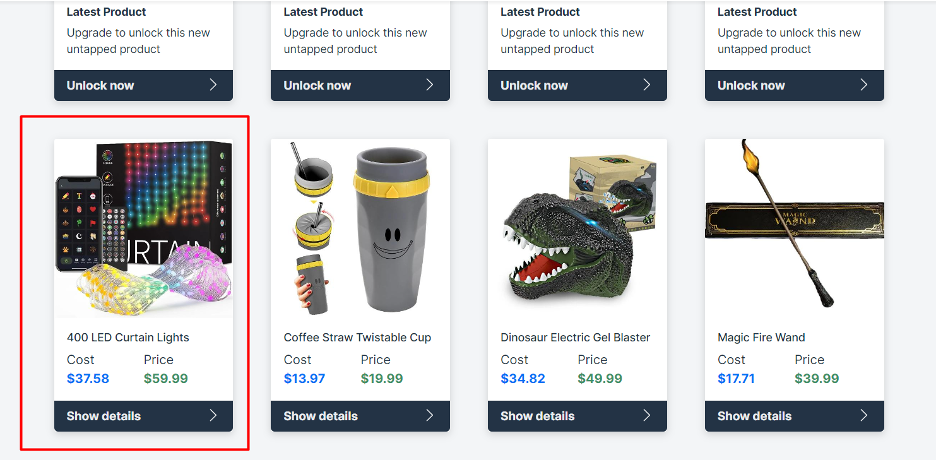
The first thing to do is look for a product that you are interested in selling. Below is an example.

Product selection in Tradelle's dashboard.Product selection in Tradelle's dashboard.

You either do this by searching for a product with keywords, navigating the Product Picks section, or combing through the product selections in the Current Trends section.

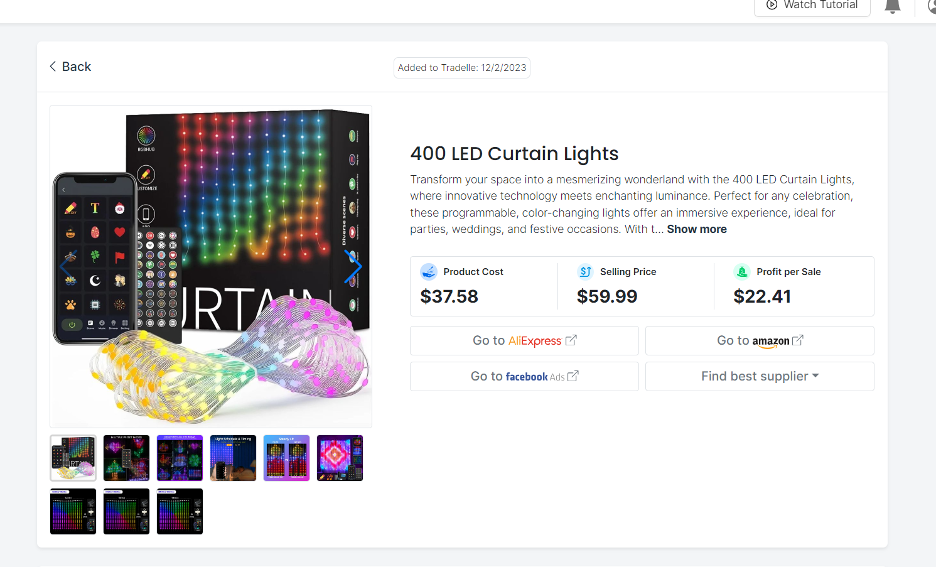
After clicking the product you like, you will see something like this:

Product page in Tradelle's dashboard.Product page in Tradelle's dashboard.

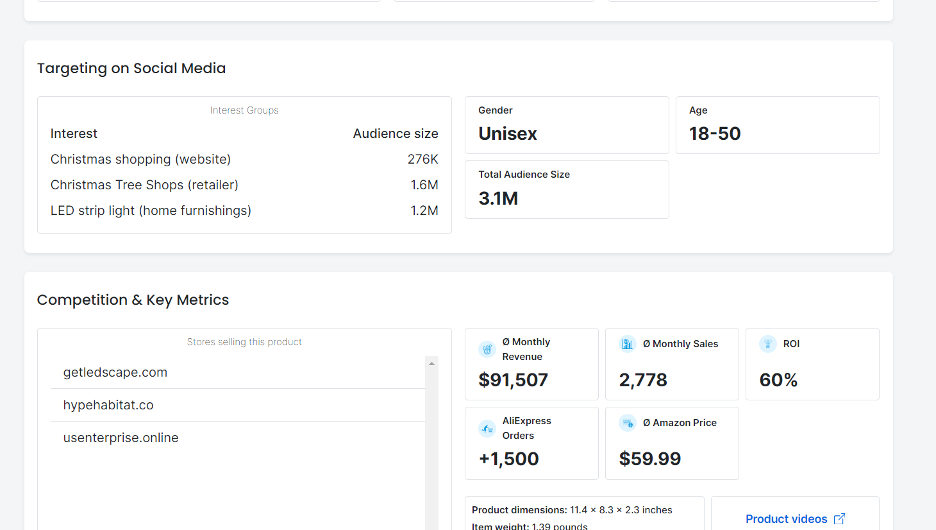
From here, you must scroll down until you find this section:

Metrics on Tradelle's product pages.Metrics on Tradelle's product pages.

As you can see, the tool provides several interest groups that you can target. In this example, there are three recommendations, and you will see the audience size for each interest group.

You will also see the gender and age demographics for this product. As you can see, it is a unisex product targeting people 18 to 50 years old.

Which audience size should you choose? It is really up to you. You need to play around with your advertising platform. For example, on Facebook, you will get a broader audience if you select more interest groups. Keep in mind that you must also choose the location of your target market.

Take a look at this example:

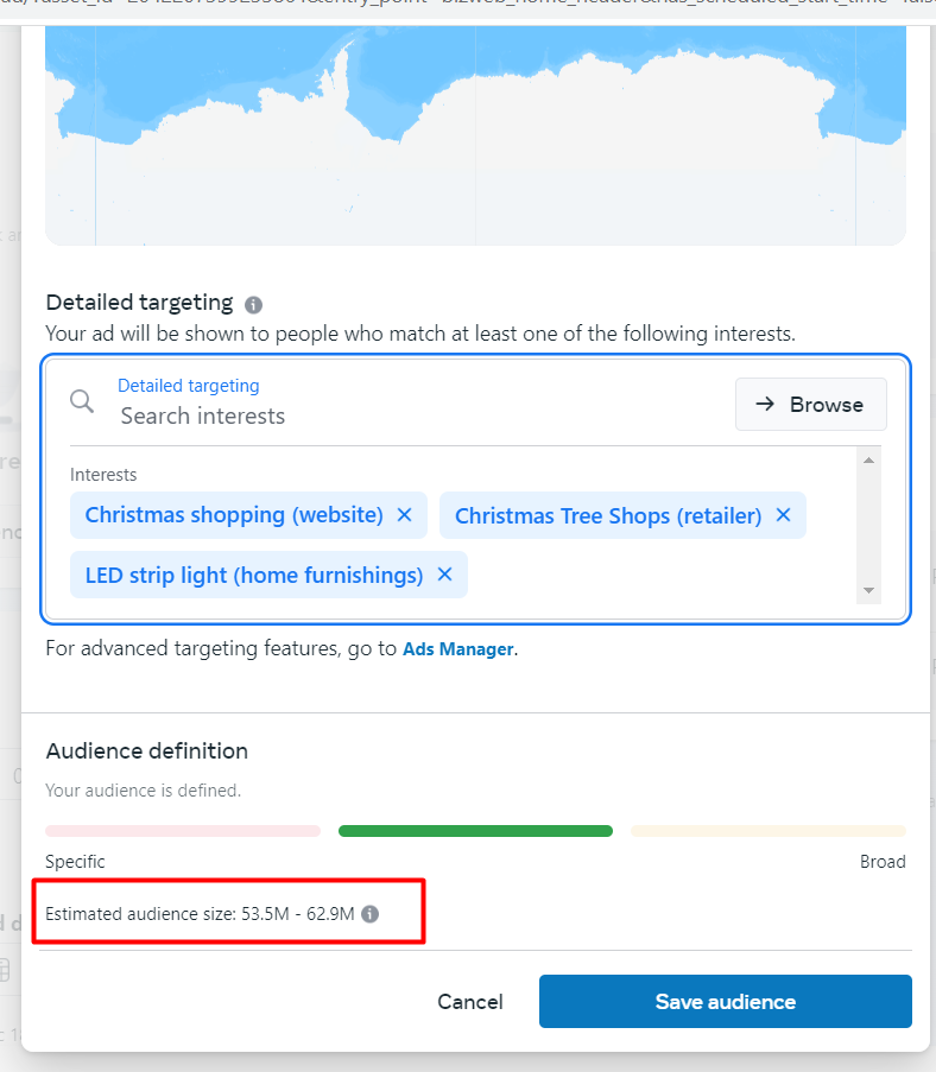
Targeting settings in Meta ads.Targeting settings in Meta ads.

The image above is a screenshot of an audience that I am building on Facebook. The target demographics are:

  • 18 to 60 years old
  • Living in the United States

Then, I used the three interests to narrow the target market. As you can see, the audience is defined, and we have a green mark or line under the Audience Definition section. At the bottom, we can see that Facebook can show this ad to many people, between 53 million and 62 million.

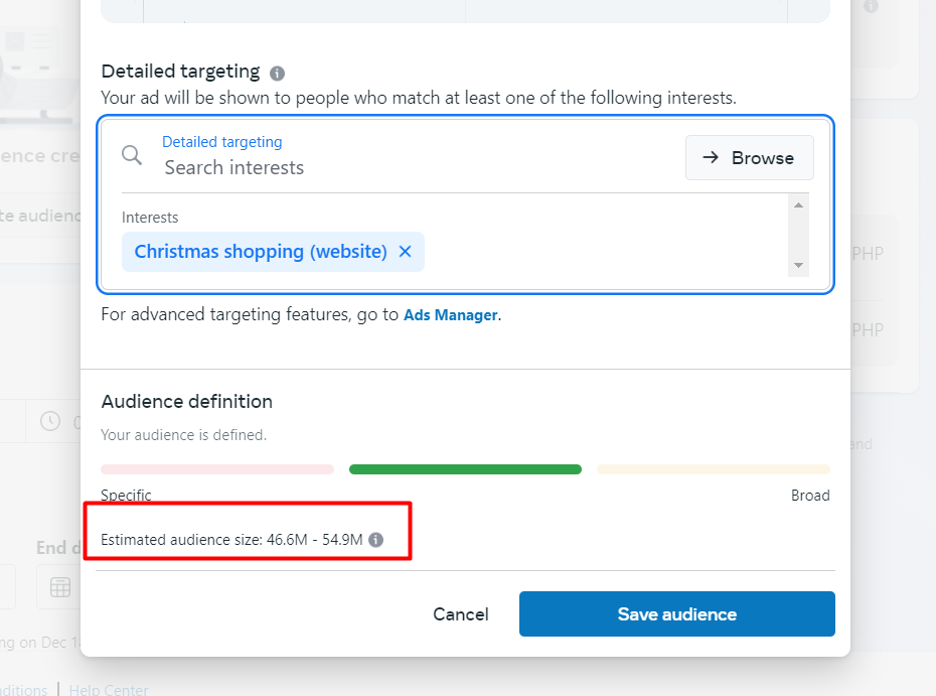
If I remove two interests, this is what I get:

Targeting settings in Meta ads.Targeting settings in Meta ads.

The audience size now is between 46 million and 54 million. So, should you include all the recommended interests or not?

The answer depends on your budget. The bigger your audience is, the more impressions Facebook will make for your ad. As you know, the more impressions there are, the higher your advertising costs will be.

For as long as the marker is green, the audience selection is good. If it is red or orange, you should either add or reduce your audience demographics and interests.

As far as the budget goes, you can set a definite amount per day during the ad creation process on Facebook. The system will tell you if your budget is too low.

The beauty of advertising on Facebook is that the system will tell you an optimal budget to make your ad competitive. What this means is if your budget is too low, you cannot even go ahead and run your ad.

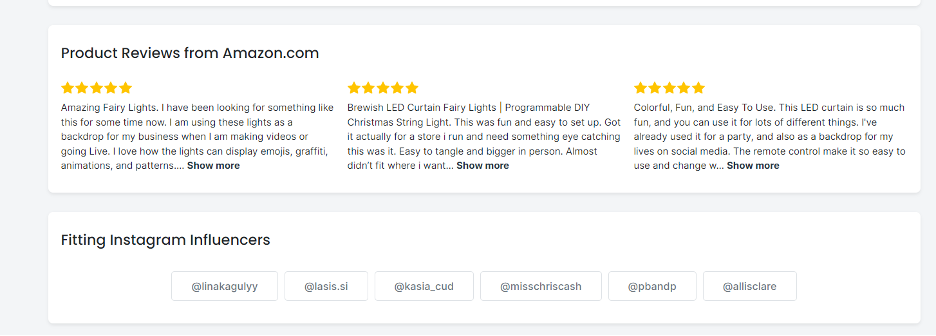
Now, if you scroll down further, you will see these details:

Product reviews on a product page of Tradelle.Product reviews on a product page of Tradelle.

As you can see, the customer reviews from Amazon can give you an idea of how to run your ad copy. These comments also tell you the psychographic and behavioral aspects of the right target audience or market for this product.

For example, the first comment said, “Use this backdrop for my business.” From here, we can say that business entities and managers are interested these lights.

Finally, you can view some Instagram influencers at the bottom. Check out their channels and see what kind of niches they support. If you want, you can even make a deal with these influencers.

Final Thoughts

The next step that I highly recommend is to sign up for a free account with Tradelle. You will have access to winning products and their respective, target markets and audiences. Or, you can start building your buyer persona for your products if you have them already. This can take a while, but I assure you that it is all worth it.

试用 Tradelle
发现值得卖的爆款商品,分析竞争对手,并让店铺自动运转。
免费注册

Aaron Matthew Ang

Aaron Matthew Ang
E-Commerce Writer at Tradelle
分享:
试用 Tradelle
发现值得卖的爆款商品,分析竞争对手,并让店铺自动运转。
免费注册

浏览电商领域最热门的文章

  • What Is Dropshipping & How Do You Get Started?

    General
    What Is Dropshipping & How Do You Get Started?
    Understanding dropshipping and steps to launch your own online business
    阅读时间 16 分钟
  • Your Guide On How To Find Winning Products On AliExpress

    Product Research
    Your Guide On How To Find Winning Products On AliExpress
    Discover top strategies to identify high-demand, profitable products on AliExpress
    阅读时间 15 分钟
  • 13 Ways To Drive Traffic To Your Dropshipping Store

    Marketing
    13 Ways To Drive Traffic To Your Dropshipping Store
    Learn about strategies that drive traffic to your store, including effective advertising practices
    阅读时间 23 分钟
  • 12 Ways To Increase Shopify Sales

    Store Optimization
    12 Ways To Increase Shopify Sales
    Learn about several proven methods to increase your store sales
    阅读时间 16 分钟

别再用 2017 年的方式做一件代发

想象一下:有人问您的供应商是谁,而您只能回答是某个私人代理、AliExpress,或一个只是替您从 AliExpress 下单的自动化工具。都 2026 年了。您的客户、营收和利润都会感谢您的升级。